In just a few years, Portugal has moved from “hidden gem” to “must-consider” for many Americans. While there are plenty of visa options for making Portugal your long-term home, that’s only one part of the journey.
If you are relocating to Portugal and want to buy real estate, you’ll need a clear picture of how much your dollar (or euro) will buy, what lifestyle trade-offs you’ll make, and where you’ll find the best blend of price, quality, and value.
So naturally the most common question is “Is property cheaper in Portugal or USA?” Well, in this article, we’ll take a look at how the housing markets compare and what you get for the same amount of money.
You’ll also find out more about:
- Portugal vs the US housing market overview
- Cost of buying a house in Portugal vs the USA
- Comparing Portugal vs the US cost of living
- Steps for buying real estate in Portugal vs the US
- Closing costs, taxes, and fees
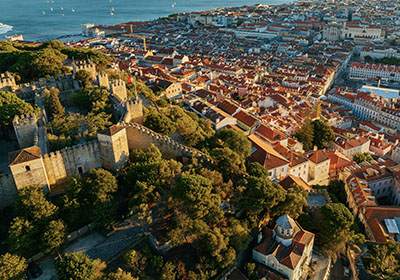
Still, the market is facing supply constraints, particularly in urban areas where new development has not kept pace with demand, especially for investors who want to rent out their properties or properties close to international schools.
Recent reports state that gross rental yields average near 5 percent, making Portugal attractive for buy-to-let investors and for migrants pursuing the Portugal D7 Visa, for example, as a requirement is a minimum amount in monthly passive income.
Secondary cities like Braga and Coimbra are now emerging as affordable alternatives, presenting growth opportunities, particularly for younger buyers and remote workers who are priced out of major metropolitan areas.
Although rising interest rates, housing prices and regulatory uncertainties have introduced a degree of caution, the underlying fundamentals—such as low supply, high demand, and a consistent influx of international interest—continue to support strong pricing in key regions.

Nationwide, home prices remain elevated, with the median sale price hovering around $420,000. However, affordability has sharply declined due to mortgage rates exceeding 6.5 percent, pricing out many first-time buyers. Inventory is historically low, largely because existing homeowners are reluctant to give up their low fixed-rate mortgages, further squeezing supply.
That said, regional variation is massive. While metros like New York, Austin and Miami have seen price surges and cooling periods, more stable midwestern cities like Minneapolis or Indianapolis offer more affordable and consistent pricing.
Overall, the US housing market for North Americans remains resilient, but affordability concerns and high borrowing costs have introduced volatility, particularly for younger and lower-income buyers.


When comparing the real cost of buying a home between Portugal and the United States, it’s not just about sticker prices; it’s about location, lifestyle, and long-term expenses. Portugal’s national average price per square meter is currently around €2,700 to €2,800, though real estate agents quickly point out that it varies widely by region.
In Lisbon, buyers expect to pay closer to €5,500 and €5,700 per square meter. A modest two-bedroom apartment in the city center typically costs between €450,000 and €600,000. In the US, the national median home price is about $422,000 (roughly €385,000). However, real estate in high-cost cities like Washington, D.C., far exceeds that.
Depending on size and amenities, a centrally located one-bedroom apartment in D.C. can range between $500,000 and $700,000 (€455,000–€640,000).
Note: €2,500 per square meter is roughly equivalent to $233 per square foot, based on the 1 square meter being roughly 10.764 square feet conversion, and the current exchange rates.

As with many European countries, living costs such as groceries and dining out are typically half the price, and public transport is both more accessible and less expensive.
Another significant difference is medical care. Portugal’s healthcare is mostly free for residents and citizens, while private health insurance costs between €50 and €150 per month for most individuals.
Equivalent health insurance coverage in the US can range from $400 to $900 per month, even higher if purchased outside employer plans.
This means that even if a buyer pays a similar upfront price for real estate in Lisbon, New York or D.C., their monthly expenses in Portugal will likely be 40 percent to 60 percent lower, which means more cash for a real estate investment.
For retirees on the D7 Visa or remote workers on the Portugal D8 Visa living on a fixed income, this translates into a much higher quality of life and long-term sustainability.


After that, both parties sign a Promissory Contract (Contrato de Promessa de Compra e Venda), at which point the buyer typically pays 10 percent to 30 percent of the purchase price as a deposit. This contract is legally binding, and if either party withdraws, penalties apply.
The final step is the Escritura, or deed signing, which takes place in front of a notary. Once this is completed, the buyer becomes the legal owner, and the property is registered with the Land Registry and the tax office.
In the US, the sequence is different and revolves around escrow, inspections, and financing. After accepting a formal offer, the buyer has a limited inspection period (often around 10 days) to assess the property.
If financing is required, the lender orders an appraisal. At the same time, a title company verifies the property’s legal ownership and identifies any liens or unpaid taxes.
Funds are held in escrow and released only once all legal and financial requirements are satisfied. The final “closing” involves signing the deed and transferring funds, often facilitated by a real estate attorney or title agent.

- Imposto Municipal sobre Transamissoes (IMT): This property purchase tax typically ranges between 5 percent and 8 percent, depending on the property’s location, use, and value. Properties under €92,407 are exempt.
- Imposto do Selo: A stamp duty levied at 0.8 percent of the property’s purchase price.
- Legal and notary fees: These usually range from 1 percent to 2 percent of the property’s value and include lawyer fees, registration, and notarial expenses.
- Real estate agency fees: Generally paid by the seller, ranging between 3 percent and 5 percent, though buyers might sometimes negotiate shared costs.
In total, purchasing a €300,000 property in Portugal could incur additional costs between approximately €20,000 and €30,000 (around 7 percent to 10 percent extra).
Similarly, buying a home in the US includes several distinct costs beyond the listing price:
- Closing costs: Typically between 2 percent and 5 percent of the property value, covering appraisal fees, home inspections, and title insurance.
- Property taxes: Rates vary dramatically by state, commonly between 0.5 percent to 2.5 percent of the assessed property value annually, with states like Texas having notably high rates (about 1.8 percent to 2 percent).
- Agent commissions: Usually around 5 percent to 6 percent, customarily paid by the seller but indirectly affecting pricing negotiations.
- Mortgage costs and interest rates: Higher interest rates (currently around 6 to 7 percent) significantly impact affordability and total long-term cost.
Purchasing a $400,000 property in the US typically incurs additional upfront costs ranging from $8,000 to $20,000, excluding recurring property taxes.
Portugal usually has higher upfront transactional costs compared to the property’s value because of elevated transfer taxes and mandatory legal fees. In contrast, the US tends to have lower immediate transactional expenses but often faces higher ongoing costs, particularly from substantial property taxes and mortgage interest payments.
When comparing raw prices, Portugal’s average housing costs are generally lower than in the United States. However, capital city premiums in both countries narrow that gap.
That said, housing in Portugal consumes a larger share of local income than in the US. Surprisingly, in comparing the capital cities, Lisbon is less affordable relative to income than Washington, D.C.
So, while Portugal looks cheaper on the surface, affordability depends on local earnings. For expats or international buyers moving to Portugal, earning in US dollars or euros at higher-than-local wages, Portugal may still feel like a bargain, especially when coming from the West Coast.
But for locals, the US market tends to offer better price-to-income ratios, especially outside the major urban centers.
Goldcrest Real Estate is the first buyer’s agent in Portugal, providing you with a tailor-made service to find your ideal property in Portugal. From sourcing to acquisition and aftercare, Goldcrest guides you throughout the buying process.
Here’s how Goldcrest stands out in making your property dreams come true:
LOCAL KNOWLEDGE: Goldcrest has offices throughout Portugal, ensuring a strong presence from the mainland to the Azores and Madeira.
INDEPENDENT SERVICE: Goldcrest don’t represent any specific development or project, ensuring their advice remains impartial. By objectively analyzing every opportunity, Goldcrest focuses on maximizing your investment prospects. They partner with various agents, sellers, promoters, and developers, ensuring a broad spectrum of property options. The goal is straightforward: To help you find the best property at the most favorable price, whether you’re buying or renting.
STREAMLINED PROCESS: Goldcrest provides a dedicated real estate consultant paired with a top-notch client management system for smooth information exchange. With the aid of advanced technology, like metasearch tools, they guarantee expansive market coverage. Goldcrest’s viewing itineraries are tailored to your needs, and they’re always ready to assist, be it in-person or on your behalf. When it comes to pricing, they use data-driven analysis to ensure you get the best deal. And, to make your journey smoother, Goldcrest assigns a dedicated onboarding account manager for every client.
ALL-ENCOMPASSING SOLUTION: Navigating financial aspects? Goldcrest is here to guide you through finance options and manage the required documentation. If you need property management solutions or connections to builders, architects, designers, and gardeners, they have you covered. Relocating? Their concierge services are designed to assist in everything, from securing accommodations to handling utility connections.
TRANSPARENCY AND PRIVACY: Goldcrest operates with a commitment to GDPR compliance, ensuring your data is protected. Expect a clear and detailed pricing model without any hidden surprises. Plus, they provide independent due diligence services to ensure every decision you make is informed.