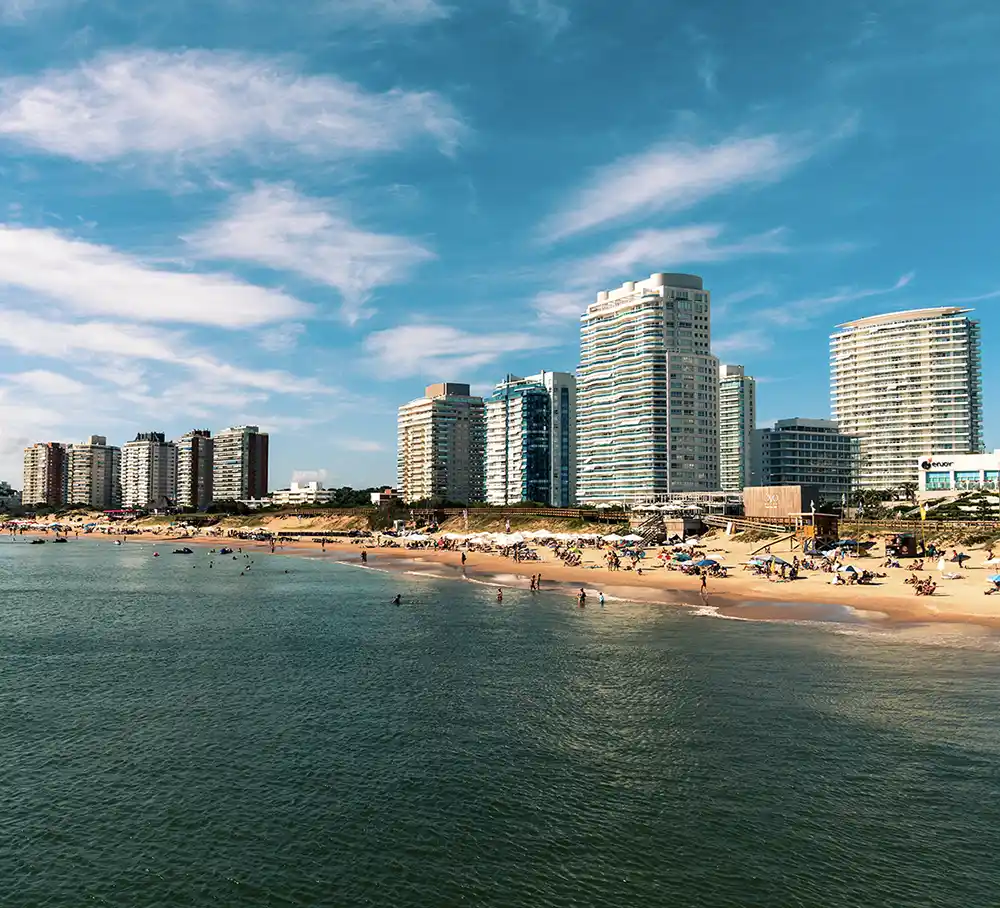
Uruguay: Residency in South America's Most Stable and Accepting Nation
Uruguay is one of South America’s safest and most politically stable countries, offering a high quality of life, excellent healthcare, and strong democratic institutions. It consistently ranks among the most livable countries in Latin America.
Uruguay attracts families, retirees, and entrepreneurs seeking security, transparency, and long-term residency options.
54th
Global Passport
49th
Enhanced Mobility
29th
Quality of Living
91st
Investment
Why Choose Uruguay?
Uruguay offers residency through the Independent Means Visa, allowing foreigners to qualify based on stable foreign income without making a major investment.
The country operates a territorial tax system and provides Mercosur mobility rights across the region.
Uruguay Independent Means Visa
The Uruguay Independent Means Visa allows individuals with consistent foreign passive income, such as pensions, rental income, or dividends, to obtain legal residency in Uruguay.
Residency can lead to permanent status and citizenship after three years for families or five years for single applicants.
Passive income can include pension payments, rental income, dividends, royalties, or other lawful recurring income. The Uruguay Independent Means Visa is particularly appealing because it does not require a major capital investment.
To qualify, applicants must demonstrate that they receive a consistent flow of passive income sufficient to support themselves and their dependents (if they have any).
Once residency is granted, applicants can obtain a Uruguayan ID (cédula) which opens a whole other world such as the ability to open a local bank account, register for healthcare and educational services, and the means to include eligible family members.
Residency via this route may be renewed and will eventually lead to permanent residency, with the possibility of gaining citizenship after approximately 3 years if married or with family or 5 years for single applicants.
You can move to Uruguay by applying for the Uruguay Independent Means Visa. This residency program is for individuals who can support themselves with stable passive income from abroad, such as pensions, rental income, dividends, or long-term foreign employment.
How do you qualify for the Uruguay Independent Means Visa?
You qualify for the Uruguay Independent Means Visa by:
Showing a stable, lawful monthly income from abroad (typically at least USD $1,500 for a single applicant; more may be needed for families)
Submitting required documents in Uruguay, including passport, clean criminal record, proof of residence, and financial statements
Being physically present in Uruguay to submit the application, complete biometric registration, and obtain the temporary ID (Cédula de Identidad)
How can I become a citizen of Uruguay?
You can apply for Uruguayan citizenship by naturalization after:
3 years of permanent residency if married, or
5 years of permanent residency if single Other requirements include maintaining a clean criminal record, demonstrating integration into Uruguayan life, basic Spanish proficiency, and showing Uruguay as your primary residence.
Does Uruguay allow dual citizenship?
Yes. Uruguay allows dual or multiple citizenships, so you can retain your original nationality while becoming an Uruguayan citizen.
Let's Talk About Your Next Move
Whether you’re seeking second citizenship or residency, planning a relocation, or building a cross-border mobility strategy, we’ll help you take the next step.