
There is no doubt that there are plenty of things to do in Lisbon, but most guides only focus on the hugely popular attractions that are world-famous, such as the Belem Tower. While you should definitely go tour the impressive structure, there is so much more to Lisbon.
And how can there not be, since Lisbon is the second-oldest European capital city after Athens? Most people don’t know that even the city’s layout is an ancient remnant from the Phoenicians, who set up a trading post.
In this article, we’ll explore some of the popular sights and a few hidden gems that first-time visitors should try to visit in this beautiful city.

There is no shortage of free things to do in Lisbon, but some experiences stand out no matter how long you stay. This list focuses on the essentials, like places and moments that define the city and give you a real sense of place.
Start here if you’re mapping out your itinerary or comparing it with other top things to do in Portugal or things to do in Lisbon when it rains.
01/ Belém Tower (Torre de Belém)
For first-time visitors, Belém Tower is a must-see and one of Lisbon’s most visited landmarks, for good reason.
Built in the early 1500s, it was part of the city’s defense system and stood at the entrance to the harbor. It was designed to impress and protect, and it still holds that presence today.
The tower is set slightly out in the river, connected to the shore by a short walkway. It’s small but full of character. Inside, you’ll find narrow spiral staircases, stone-walled rooms, and open terraces with clear views of the Tagus.
There are also lookout points and a former prison area below sea level. As you move through, keep an eye on the details, like the carved ropes, crosses, and animals in the stone.
Most people spend about 30 to 45 minutes here. Entry is timed, and stairs can get crowded, especially midday, so early mornings or late afternoons are ideal. You don’t need a guide, but a quick read before going helps.
Belém Tower is part of a larger riverside walk that includes other major sites like the Monument to the Discoveries and Jerónimos Monastery. The area is easy to explore in a half-day.
Pro tip: After your visit, head to Pastéis de Belém nearby. It’s busy, but the pastries are worth it.
02/ Jerónimos Monastery (Mosteiro dos Jerónimos)

Just a short walk from Belém Tower, Jeronimos Monastery is one of the most impressive buildings in Lisbon.
It was also built in the early 1500s and funded by Portugal’s wealth from trade during the Age of Exploration. Today, it’s a UNESCO World Heritage Site and a popular stop for anyone visiting the city.
The monastery is massive, with a long stone façade and an entrance into a quiet, vaulted church. Inside, you’ll find the tomb of Vasco da Gama and several other notable figures from Portuguese history.
The real highlight, though, is the cloister. It’s a large, open courtyard surrounded by two levels of arched walkways. Every part of it, from the columns to the ceilings and railings, is carved with intricate details. It’s quiet and peaceful, a nice contrast to the busy street outside.
Allow at least an hour for your visit, especially if you want to explore the church and cloister. Tickets are required for the cloister, but the church is free to enter. Lines can get long, so buying tickets online in advance is a good idea.
Pro tip: Combine your visit with Belém Tower. They’re close to each other, and one ticket often covers both. Come early to beat the tour groups and get better photos in the cloister.
03/ Alfama District
Alfama is Lisbon’s oldest neighborhood and one of its most distinctive.
It sits on a hillside beneath the São Jorge Castle, with steep, narrow streets that wind down toward the river.
The area survived the 1755 earthquake, so many of its buildings and alleyways still reflect the city’s early character.
Walking through Alfama is the main attraction. There are no big-ticket sights you have to see as it’s more about the atmosphere. Expect tiled facades, overhead laundry lines, small family-run cafés, and fado music coming from open windows. It’s a place to slow down and explore on foot.
Popular stops include the Lisbon Cathedral, the Miradouro de Santa Luzia viewpoint, and the small local shops tucked into the ground floors of old buildings. Trams also pass through the area, including the famous 28 line, though it’s often easier to explore on foot due to the tight streets.
Alfama is hilly and uneven in parts, so wear comfortable shoes. It’s also one of the best neighborhoods to visit in the late afternoon or early evening when fado restaurants open and the light hits the rooftops just right.
Pro tip: Skip the restaurant flyers and instead look for a simple, no-frills tasca with locals inside. You can also use Google Maps to get insider information on where to get the best Portuguese cuisine or a traditional restaurant.
04/ São Jorge Castle (Castelo de São Jorge)
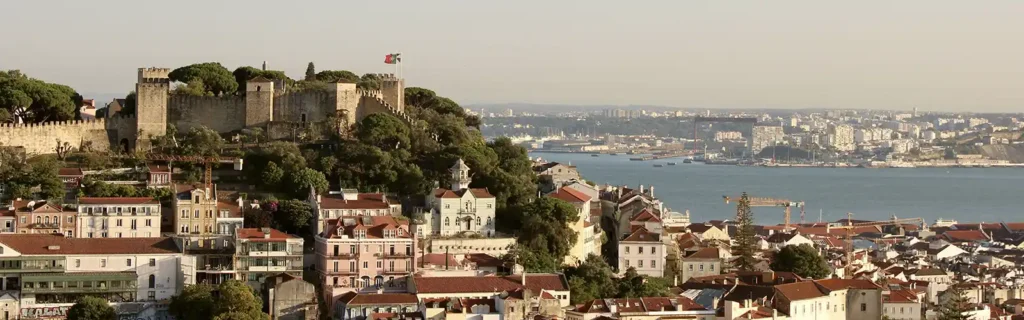
Perched at the top of Lisbon’s highest hills, São Jorge Castle is hard to miss.
It’s a medieval fortress that once protected the city, and today, it offers some of the best panoramic views of Lisbon. You can see the red rooftops, the river, and even the 25 de Abril Bridge from up here.
The site dates back centuries, with Moorish and Christian influences throughout history. Visitors can walk along the old stone walls, climb towers, and look out from various viewpoints. Inside the grounds, there are gardens, a small archaeological site, and a camera obscura that projects real-time images of the city.
It’s not a polished museum experience, as much of the charm is walking the walls and taking in the view. Plan for about one to two hours to explore at a relaxed pace. Tickets are required, and you can buy them at the entrance or online.
You can reach the castle on foot from Alfama, though it’s a steep climb. Taxis, tuk-tuks, and trams also go part of the way if you prefer to save your energy.
Pro tip: Go in the late afternoon. The light is perfect for photos, and the crowds tend to thin out as the day goes on.
05/ Praça do Comércio
Praça do Comércio is one of Lisbon’s main squares, located right on the riverfront. It was once the royal palace site before the 1755 earthquake leveled it.
Today, it’s a large, open space surrounded by yellow buildings with arcades and cafes. In the center stands a statue of King José I on horseback.
The square is more than just a photo stop, as it’s also a useful point of reference in the city. From here, you can walk into the Baixa district, head up to Chiado, or follow the waterfront path toward Belém.
The large archway at the square’s northern end, the Arco da Rua Augusta, leads into Lisbon’s pedestrian shopping street. You can go to the top of the arch for a view of the square and the river.
While there aren’t major attractions in the square, it’s a great spot to take a break, especially at sunset when the light hits the buildings. Plenty of places are nearby to grab a coffee, sit outside, and people-watch.
Pro tip: Skip the pricey riverside cafes and walk a block or two into Baixa. You’ll find the same coffee for half the price.


06/ Palace of the Marquises of Fronteira
This palace is a bit off the usual tourist trail, but it’s one of Lisbon’s hidden gems. Located just outside the city center, the Palace of the Marquises of Fronteira is a 17th-century residence that’s still partially lived in today. It’s best known for its gardens and colorful tile work.
The palace was initially built as a hunting lodge and later became the home of the Fronteira family. Parts of it are open to the public on guided tours, which take you through rooms filled with antiques, portraits, and painted ceilings.
The highlight for many visitors, though, is the garden. It features detailed azulejos (ceramic tiles), fountains, statues, and hedged pathways, all arranged with a mix of elegance and a bit of eccentricity.
Visits are by guided tour only and usually in the morning, so plan ahead. It’s quieter than Lisbon’s bigger sights, making it a peaceful break from the busy downtown.
You can get there by taxi or bus or walk from the nearby Jardim Zoológico metro station if you’re up for a bit of a hill.
Pro tip: If you’re into photography, this is one of the best places in Lisbon for tile work. Go on a sunny day for the best light in the gardens.
07/ Torel Garden (Jardim do Torel)
Torel Garden is a small, quiet park tucked into a hillside above central Lisbon. It’s not as well-known as some of the city’s larger viewpoints, but it offers a relaxed atmosphere and great views without the crowds.
You’ll find benches under trees, a small café, and a lookout with a wide view over Avenida da Liberdade and the downtown rooftops. It’s a popular spot for locals to read, take a break, or enjoy a slower pace. The garden also has a seasonal splash pool that opens in summer, often used more by locals than tourists.
You can reach Jardim do Torel by taking the Lavra funicular or walking up from the city center. It’s steep but manageable. This is the kind of place that rewards you for going a little off-route.
There’s not much to “do” here in a typical tourist sense—it’s more about catching your breath, taking in the view, and maybe grabbing a coffee. It’s a good spot to rest between sights or end your day before heading downhill again.
Pro tip: Bring a snack or drink and stay until just before sunset. It’s usually quiet, and the light over the city is worth the short climb.
08/ Thieves Market (Feira da Ladra)

Feira da Ladra is Lisbon’s oldest and most famous flea market. Despite the name, it’s completely legal and above board.
You’ll find it in the Alfama district, spread out across Campo de Santa Clara, not far from the National Pantheon.
The market runs on Tuesdays and Saturdays, starting early and going until mid-afternoon. Stalls sell a bit of everything: old books, vinyl records, antiques, tiles, clothes, tools, handmade crafts, and the occasional odd item you didn’t know existed. Some things are valuable, some are just fun to browse.
This isn’t a polished, curated market—it’s a mix of professional sellers and locals clearing out their attics. Haggling is common, and prices range from very cheap to surprisingly high depending on the item and the seller.
Even if you don’t plan to buy anything, it’s a good spot for a walk and a bit of people-watching. The vibe is casual, and you’ll often hear live music or catch locals chatting over coffee at nearby kiosks.
Pro tip: Bring cash, wear comfortable shoes, and get there early for the best finds. For a full morning out, pair it with a visit to the Pantheon or nearby viewpoints.
09/ Tapada da Ajuda
Tapada da Ajuda is one of Lisbon’s lesser-known green spaces, but it’s a great place to escape the crowds. Located near Alcântara and not far from Belém, it’s a large, wooded park that once served as a royal hunting ground. Today, it’s part of the University of Lisbon’s agricultural institute, so it’s both public and somewhat tucked away.
The space feels different from Lisbon’s other parks—it’s bigger, quieter, and more natural. Expect dirt paths, open fields, shaded picnic areas, and great views over the 25 de Abril Bridge and the Tagus River. There’s also a small botanical garden and sometimes temporary exhibits or events hosted by the university.
It’s not a tourist spot, which is part of the appeal. You won’t find cafes or rentals here, so bring whatever you need—especially if you’re planning a picnic or a longer walk. It’s ideal for a peaceful break in nature without leaving the city.
Access is easiest by car or rideshare, but you can also reach it by bus or a 15–20 minute walk from Alcântara or Belém.
Pro tip: Go on a weekday morning if you want the place nearly to yourself. It’s one of the quietest places in Lisbon with a view.
10/ Quinta do Mocho Murals
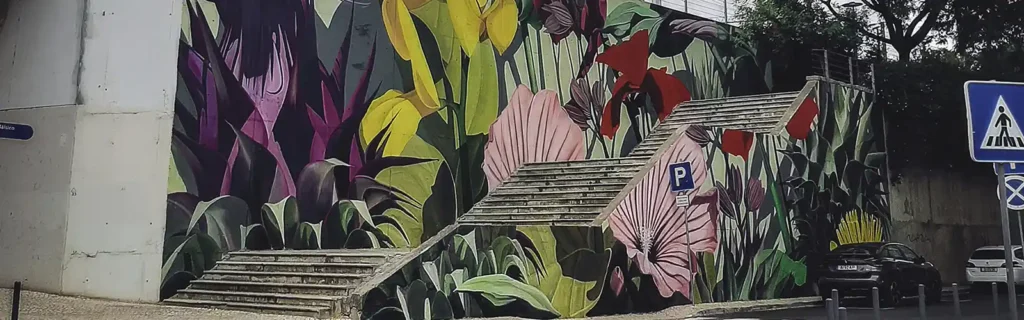
Quinta do Mocho isn’t on most tourist itineraries, but it’s home to one of the most impressive collections of street art in Lisbon.
Located in the suburb of Sacavém, this public housing neighborhood has transformed into an open-air art gallery, with over 100 large-scale murals covering the sides of buildings.
The project started in 2014 as a local initiative to bring new life and visibility to an area often overlooked. Artists from Portugal and around the world were invited to paint the buildings, and what started as a grassroots effort quickly became one of the largest mural collections in Europe.
It’s one of the more enchanting free things to do in Lisbon. You just walk the neighborhood and take it in. Some murals span entire facades, while others are tucked between buildings. The work is bold, varied, and tied closely to themes of identity, struggle, community, and cultural pride.
Getting there requires a bit of planning. You’ll need to take a train or bus from Lisbon’s city center to Sacavém, then walk into the neighborhood. It’s best to go during the day.
Pro tip: If you’re not sure where to start, consider joining a local street art tour. Some residents now offer guided walks that add context and history to the experience.

11/ Wander through the Calouste Gulbenkian Museum
The Calouste Gulbenkian Museum in Lisbon is one of Europe’s most remarkable cultural institutions, housing the vast and exquisite private collection of Armenian-British philanthropist Calouste Sarkis Gulbenkian.
Its holdings trace five millennia of human creativity, from ancient Egyptian, Greek, and Roman artifacts to masterpieces from the Islamic world, East Asia, and Western Europe.
Visitors encounter works by artists such as Rembrandt, Rubens, Turner, Monet, and René Lalique, reflecting Gulbenkian’s discerning taste and lifelong pursuit of artistic perfection.
12/ Marvel at the National Museum of Ancient Art
The National Museum of Ancient Art (Museu Nacional de Arte Antiga) in Lisbon is Portugal’s leading art museum and one of Europe’s most significant collections of its kind.
Housed in a 17th-century palace overlooking the Tagus River, the museum preserves the country’s artistic heritage from the Middle Ages to the early 19th century.
Its galleries display Portuguese and European paintings, sculpture, furniture, textiles, and decorative arts, alongside rare Asian and African pieces that reflect Portugal’s global connections during the Age of Discovery.
13/ Browse through the Berardo Collection Museum
The Berardo Collection Museum, located in Lisbon’s Belém Cultural Center, is one of Portugal’s foremost museums of modern and contemporary art.
It showcases the extensive private collection of José Berardo, a Portuguese businessman and art collector, whose holdings trace the evolution of modern art from the early 20th century to the present.
The museum’s permanent collection includes pivotal works by artists such as Picasso, Dalí, Duchamp, Warhol, Pollock, and Bacon, representing movements from Cubism and Surrealism to Pop Art and Minimalism.
14/ Savor the authentic pastel de nata

Eating a pastel de nata in Lisbon is one of those small yet deeply memorable experiences that captures the city’s essence.
Whether you’re at Pastéis de Belém, where the recipe has been guarded since the 19th century, or at Manteigaria, known for its crisp perfection and open kitchen, the ritual is as much about atmosphere as it is about taste.
15/ Explore Pink Street and LX Factory
For nightlife and creative spaces, head to Pink Street, then make your way to LX Factory, a creative hub filled with small businesses, art, and dining options. Both represent the vibrant city energy that defines Lisbon.
16/ Get the Lisbon Card for Tram 28
The Lisbon Card offers access to many of the main sites, museums like the Royal Treasure Museum and the Calouste Gulbenkian, plus transportation, including Tram 28, the scenic 18th-century line beloved by tourists.
17/ Visit Alfama and Belém
Wander through the Alfama district, Lisbon’s oldest residential neighborhood, and check out Centro Cultural de Belém, the Mosteiro dos Jerónimos, and the Padrão dos Descobrimentos—a UNESCO World Heritage site.
18/ Ride the iconic Elevador da Glória
Take the 19th-century Elevador da Glória from Restauradores Square to São Pedro de Alcântara for one of the city’s stunning views—and perhaps a glass of Super Bock at the top.
The easiest way to explore many places is by tram, bus, or on a Lisbon walking tour. Be sure to stop at Rossio Station, a train station with an impressive wrought iron and Portuguese tiles facade.
19/ Explore the Lisbon Oceanarium

The Lisbon Oceanarium, located in the Parque das Nações district, is one of Europe’s largest and most impressive aquariums, offering visitors an immersive journey through the world’s marine ecosystems.
Built for Expo 98 and designed to resemble an aircraft carrier floating on water, it houses a vast central tank surrounded by four distinct ocean habitats — the Atlantic, Pacific, Indian, and Antarctic.
Each area recreates the environment and biodiversity of its respective ocean, with species ranging from sleek sharks and rays to playful sea otters and delicate coral fish.
20/ Climb up to breathtaking viewpoints
Enjoy panoramic views from the Miradouro de Santa Luzia or the viewpoint sits near Castelo de São Jorge. These best viewpoints offer amazing views over the Tagus River and the city’s rolling hills.
What do you need to visit Lisbon?
Planning a trip to Portugal’s capital city is relatively easy. However, the amount of paperwork required depends on your citizenship.
If you are a citizen of a country in the Schengen Area, you don’t need more than a national identity document if you visit Portugal for tourism. You can even leave your passport at home, as long as you are not planning to travel outside the zone.
There are also 61 countries whose citizens can travel to the country for Portugal tourism experiences visa-free for up to 90 days. These include the UK, USA, Canada, Australia, and New Zealand.
However, if you are a citizen of a non-Schengen Area or non-European Union country, you must first apply for a tourist visa in your home country. The Portugal visa entry requirements differ depending on the country, and several visa options will allow you to travel, live or work in Portugal.
