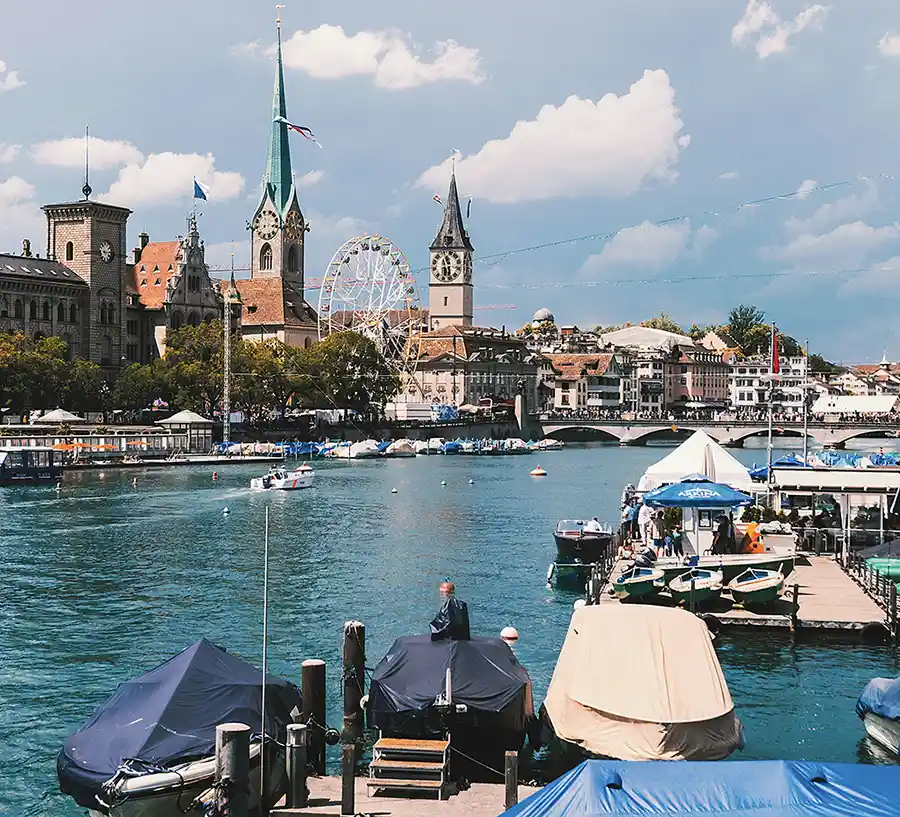
Switzerland is one the safest countries with one the most powerful passports according to our Global Passport Index. It guarantees a great quality of life, tax advantages for investors that also benefit their family members, with some of the most successful industries in banking and finance.
Investors and families are drawn to the country because it is a safe haven, located in central Europe, with a stable economy and a business-friendly environment that includes competitive tax rates and a strong financial system.
Switzerland is known for its peaceful lifestyle, clean cities, and beautiful natural scenery, from lakes to the Alps. It has a strong sense of safety, stability, and privacy which makes it one of the most trusted countries in the world. Switzerland also has one of Europe’s strongest and most reliable economies.
The culture is calm, efficient, and welcoming, with four national languages and a high standard of living. Daily life is organized and reliable, with excellent public transport, top-quality healthcare, and world-class education. Switzerland is the perfect country for anyone looking for stability, business opportunities, and a refined lifestyle, as it stands out as a place where everything simply works.
The Switzerland Lump-Sum Tax Residency program allows eligible foreign nationals to live in Switzerland while paying tax based on their annual living expenses rather than worldwide income or assets. The tax amount is agreed with the canton and must meet federal minimum rules. Although a few cantons have abolished the program, it remains available in most parts of the country.
Once the tax agreement is approved, you receive a standard Swiss B residence permit. It allows short-stay, visa-free travel across the Schengen Area and to live in Switzerland without working, The residence permit is valid for one year, as long as you maintain the tax arrangement and show financial self-sufficiency.
Switzerland’s lump-sum taxation calculates the tax base based on your annual worldwide living expenses. A control calculation ensures it is at least as high as the tax you would pay on Swiss income and assets. This is called expenditure-based taxation.
The taxable amount cannot be lower than the highest of:
We discuss your goals, lifestyle plans, and financial situation to determine if Switzerland’s lump-sum tax residency is the right option.
We guide you through the initial setup, explain the process, and prepare you for the next steps, ensuring you are fully ready to proceed.
We identify the best canton for your profile and guide you through eligibility requirements and tax planning.
We organize all necessary documents, submit your application to the canton, and negotiate your lump-sum tax base.
We handle communication with cantonal and federal authorities, ensuring your application progresses smoothly and keeping you updated at every stage.
Once approved, you receive your B-Permit. We guide you on registration, biometric collection, and maintaining your lump-sum tax arrangement.
No, Switzerland is not part of the European Union, but it has bilateral agreements with the EU that allow for trade, travel, and residence arrangements with EU countries.
Non-working foreign nationals who are financially self-sufficient and relocate to Switzerland may qualify for lump-sum taxation, provided they meet the requirements set by the canton in which they intend to live.
Once the tax agreement is approved, applicants are granted a standard Swiss B residence permit, which is valid for one year and renewable, allowing them to live in Switzerland without working.
The Swiss residence permit is valid for one year and can be renewed each year as long as the conditions of residence continue to be met. After several years of legal residence and good integration, foreigners can apply for a C-Permit, which offers long-term stability. Unlike the B-Permit, it’s valid for five years and requires less paperwork.
The processing time for the Swiss residence permit can take between 3 and 7 months (depending on the canton) from initial contact to residence permit issuance. However, some complicated cases or third-country nationals may require additional time for SEM approval.
Whether you’re seeking second citizenship or residency, planning a relocation, or building a cross-border mobility strategy, we’ll help you take the next step.
"*" indicates required fields