
Knowing how long a passport lasts helps you avoid travel anxiety and last-minute renewals. In most countries, a passport is valid for a fixed period based on your age at the time of issue.
For example, a US passport is valid for 10 years if you are 16 or older, and five years if you are under 16. Until recently, by contrast, an adult Portuguese passport was only valid for five years. However, knowing how long your passport is good for is not enough when you plan international travel.
A passport’s validity also plays a role in whether a country will allow you entry. Many border control officers and airlines require your passport to remain valid for at least six months beyond your travel dates. If your passport expires sooner, they may refuse boarding or deny entry.
In this article, we’ll take a look at how long a passport lasts, how validity differs by age, and when you should renew your passport to travel without issues.
Passport Validity: Key Takeaways


How long a passport lasts depends on your age when it is issued. Governments set shorter validity periods for children because their appearance changes more quickly, while adult passports remain valid for longer.
Adult passports
If you are 16 or older, your passport is usually valid for 10 years. This includes the United States, the United Kingdom, and Australia. In Canada, adults aged 16 or older can choose between a 5-year or 10-year validity period.
Child passports
Children under 16 are typically issued passports with a shorter validity period of five years. This ensures their photo and personal information remain up to date as they grow older, since their appearance will more frequently change year upon year.
Temporary and emergency passports
Temporary and emergency passports follow different validity rules than standard passports. These documents are usually issued in urgent situations, such as lost or stolen passports or last-minute travel.
In most cases, a temporary or emergency passport is valid for a much shorter period, often ranging from a few months up to one year. The exact validity depends on the issuing country and the circumstances of your application.
Passport validity is crucial when applying for a visa. Many countries require your passport to remain valid not only for the duration of your visa, but also for several months beyond your planned departure date.
In most cases, your passport must be valid for at least six months at the time of your visa application. For the Greece Golden Visa, your passport must be valid for at least 12 months at the time of your residence permit application and for the duration of your initial residence.
However, there are instances where this is shorter.
For example, when apply for the Portugal D7 Visa, your passport needs to have an expiry date at least three months later than the duration of your stay in Portugal, and it must have at least two blank pages.
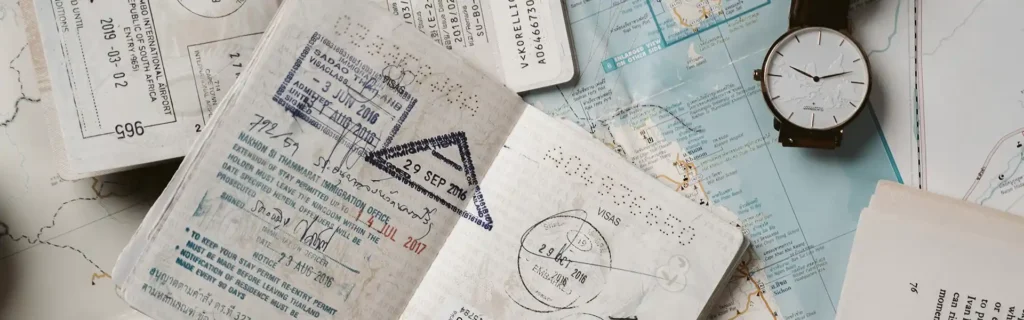
One of the most misunderstood aspects of passport rules is the six-month validity requirement. The six-month passport rule means your passport must stay valid for at least six months beyond your date of entry, departure, or return, depending on the destination.
This rule applies in many countries, and airlines often check for it before you board. A passport may still be unexpired, but you could still face problems if it falls short of a country’s minimum validity requirement.
The rule exists because some governments want travelers to hold a passport with enough remaining validity in case their stay is extended, their return is delayed, or an emergency changes their travel plans. In practice, this means a passport with only three or four months left may not be accepted for international travel, even though it is still valid.
Do all countries require six months validity?
Not all countries enforce the six-month passport rule. Some destinations only require your passport to be valid for the duration of your stay, while others require three months of validity beyond your departure date.
Traveling close to your passport’s expiry can be risky and isn’t advisable. This can cause issues like visa applications being denied if your passport expires too soon, airlines not allowing you to board flights or being turned away by immigration officers at the airport.
To avoid surprises, renew your passport at least 6 to 12 months before the expiration date of your passport book.

Knowing how long a passport lasts is only part of the equation. The more important question is when you should renew it to avoid travel disruptions.
As a general rule, you should renew your passport at least six to nine months before it expires. This recommendation aligns with international travel requirements, especially the six-month validity rule enforced by many countries.
How early should you renew your passport?
You should consider renewing your passport earlier in the following situations:
- You plan to travel internationally within the next year
- Your passport has less than six months of remaining validity
- You need to apply for a visa, as many countries require full validity during the application process
- Your passport has limited blank pages for entry and exit stamps
Renewing your passport is a straightforward process, but the exact steps depend on your country of citizenship and whether you qualify for renewal by mail or online. In most cases, the process follows a similar structure.
Payment methods for online renewals include debit card or credit card, while mail applications require a personal check or money order. In the United Kingdom, passport renewals are paid online using a debit or credit card.
How to renew a US passport online
- Head on over to the US Department of State’s Online Passport Renewal. You’ll need your most recently issued passport book or card.
- Answer the “Upcoming Travel” questions.
- Accept the “Terms and Conditions”
- Select whether you are renewing your passport book, passport card, or both.
- Enter your details and that of the passport
- Upload a digital photo according to the specifications
- Digitally sign and submit your application
- Pay the $130 fee for your passport book or $30 for your passport card
It should take a few weeks for your passport application to be processed and your current passport will be cancelled after submitting a renewal request.
How to renew a UK passport online
- Go to the “Apply online for a UK passport” webpage
- Answer the questions and enter your birthday
- Select whether you need a passport urgently or not
- Answer the questions and upload a photo according to the specifications
- Go through the list of required documents. Sometimes it’s neccessary to send in your old passport if HM Passport Office asks you to do so as part of the application.
- Pay the £94.50 fee for a standard passport, or £107.50 for a 54-page frequent traveller passport
- Submit your application.
After submission, you’ll get a tracking number to check on the process, but generally it will be delivered to your home by Royal Mail tracked delivery within three weeks.
Passport renewal processing times
Processing times for you passport renewal application vary depending on the country, how you application for it, and whether you choose standard or expedited service.
While it can take longer during busy periods (like a few weeks for the holidays), it should take between 3 to 6 weeks for your renewed passport to arrive. An expedited service is faster (and usually costs more) and can cut your waiting time down to a week or two.

No, not all passports can be renewed online. While many countries now offer digital renewal options, eligibility depends on how long ago it expired, whether you need to change your details or the condition of your passport.
For example, you can’t apply for a new passport online in the US if it expired more than five years ago or it will expire in more than a year, you are younger than 25 years old, or you need to change your personal information such as your name or sex.
Other countries, like South Africa and France, have a hybrid model where you can apply for a passport renewal and pay the fee online, but you still need to visit a Home Affairs branch or participating bank to have your biometrics captured.
However, countries like Australia require you to fill out a form online, print it out, and take it with two passport photos to a participating Australia Post outlet.
