Living in Argentina: Practical 2026 Guide for Expats

Living in Argentina offers expats a mix of vibrant city life, diverse landscapes and an accessible cost of living. From Buenos Aires and its cafés, restaurants and cultural scene to Mendoza’s vineyards and Bariloche’s mountain lifestyle, there are options for different priorities and budgets. Numbeo’s 2026 figures put average one-bedroom rent at around $517 a month in a city centre and $365 outside the centre. Foreign nationals can also explore several routes to live legally in Argentina, including Rentista, Pensionado, work, student, family reunification and Digital Nomad residence. 

For those considering relocation, choosing the right residence route is only part of the process. At Global Citizen Solutions, we help clients understand the legal and practical aspects of moving to Argentina, from residence and DNI requirements to healthcare, banking, employment and tax considerations. 

Living in Argentina: Key Takeaways

 Argentina offers several ways to live legally, including Rentista, Pensionado, Work, Student, Family Reunification, Mercosur and Digital Nomad residence. 
Residence and DNI are separate processes: you must first receive residence approval before applying for an eligible foreigner DNI. 
Living costs vary by location: Numbeo’s 2026 figures show average one-bedroom rent of $517 in the city centre and $365 outside the centre. 
Buenos Aires, Córdoba, Mendoza, Rosario and Bariloche offer different lifestyles, from major-city culture and nightlife to wine country, riverside living and mountain activities. 
Healthcare and education depend on your residence status: emergency healthcare remains available regardless of status, while routine healthcare and schooling arrangements differ for foreign residents. 
Foreign nationals need to consider work and tax rules: permission to work depends on immigration status, while tax obligations depend on factors such as tax residence, income and assets. 

Is Argentina a Good Fit for You?

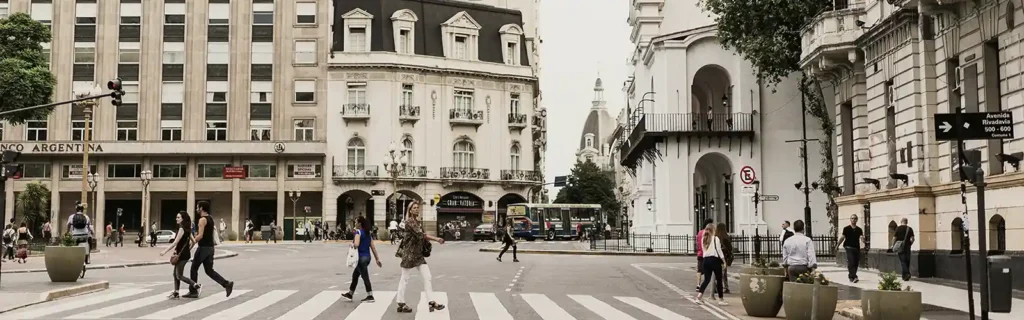
Street in Buenos Aires, Argentina

Argentina will suit different types of expats depending on their income, reason for moving and preferred lifestyle: 

  • Students: Argentina has an established higher-education system, with the University of Buenos Aires (UBA) ranking 84th globally in the QS World University Rankings 2026. The country also offers temporary residence for international students enrolled in recognized programs. 
  • Retirees and pensioners: Argentina has a temporary residence category for qualifying pensioners receiving regular income from abroad. Retirees can choose between cities such as Buenos Aires, Córdoba and Mendoza, each offering different climates, services and lifestyles. 
  • People with passive income: The Rentista residence category is designed for people who can support themselves through qualifying income from assets abroad, including investments, property or business interests. It does not cover income from personal employment. 
  • Remote workers and digital nomads: Argentina offers a Digital Nomad authorisation for eligible visa-exempt nationals working remotely for people or companies outside Argentina. The authorisation lasts 180 days and can be extended for another 180 days. 
  • Mercosur nationals: Citizens of Mercosur member and associated countries have access to a dedicated residence pathway based on their nationality, providing a separate basis for establishing residence in Argentina. 
  • Workers and professionals: Argentina has a temporary residence category for migrant workers. This can suit people who already have an employment opportunity or qualifying work arrangement in the country. 

How to Live in Argentina Legally

Visa / residence routeWho it is for / qualifying requirementValidity
Argentina Rentista VisaApplicants supported by qualifying income from assets abroad. The official requirement is at least five Minimum Living and Mobile Wages (SMVM). The income must come from assets such as financial instruments, real estate or business interests and cannot be income from personal employment.1 year, renewable
Argentina Pensionado VisaRetirees receiving a regular and permanent qualifying pension from a government, international organisation or private company for services performed abroad. The official minimum is five SMVM.1 year, renewable
Argentina Digital Nomad VisaEligible nationals who can enter Argentina without a tourist visa and work remotely for people or companies outside Argentina. No fixed minimum income is specified in the official requirements. Applicants must provide evidence of their remote activity, such as contracts, company confirmation or proof of income.180 days, extendable for another 180 days
Argentina Family Reunification VisaForeigners with qualifying family ties to an Argentine citizen or eligible temporary or permanent resident.Up to 3 years, depending on the qualifying family relationship
Argentina Work VisaForeigners taking up qualifying employment in Argentina. The migrant worker category requires the relevant employment documentation and an employer registered with RENURE.Up to 3 years under the statutory category, with the period granted determined by the immigration authorities
Argentina Student VisaForeigners enrolled as regular students in recognised secondary, tertiary, university or specialized programs.1 year, renewable
Argentina Investor VisaForeigners who invest their own assets in activities considered of interest to Argentina. There is no verified universal USD $500,000 minimum for this residence category in the current official legislation.Up to 3 years under the statutory category, subject to the period granted
Argentina Mercosur VisaNationals of Mercosur member and associated countries qualifying under the nationality-based residence framework.2 years

What about Argentina’s citizenship-by-investment proposal? 

Argentina proposed a citizenship-by-investment framework in May 2025 through Decree 366/2025, which will allow foreigners to make a relevant investment in Argentina to apply for citizenship without the usual two-year residence period. In July 2025, Decree 524/2025 established the application and assessment process, with the Ministry of Economy responsible for determining which investments qualify. There is no legally fixed US$500,000 minimum investment, so this figure should not be presented as an official requirement. 

Residence routes and DNI are different steps 

Getting legal residence in Argentina and obtaining a DNI (Documento Nacional de Identidad) are separate steps. The Dirección Nacional de Migraciones (DNM) first assesses the residence application and, if approved, grants temporary or permanent residence. Once you have valid temporary or permanent residence, you can then apply for your foreigner DNI through RENAPER. Temporary and permanent residents are eligible for the corresponding DNI, while transitory residence does not generally qualify for a DNI. 

In simple terms, you apply for residence, then receive residence approval and finally apply for your DNI. A DNI is therefore not automatically granted when you submit a residence application, and having a DNI does not itself determine your immigration status. 
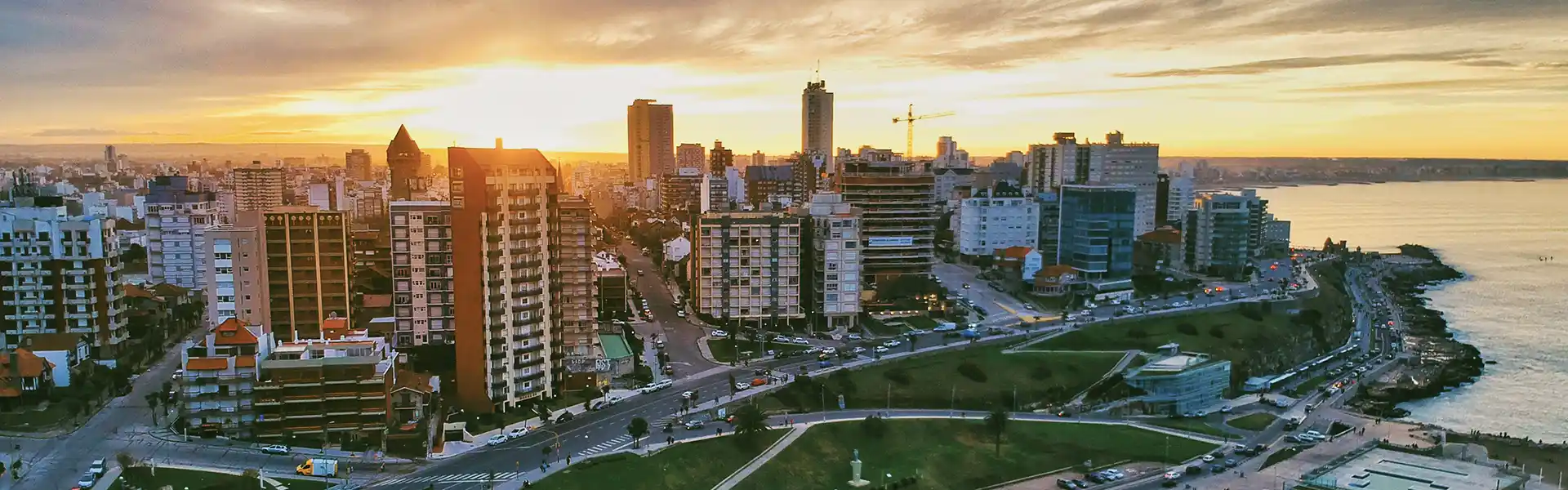
sunset buenos aires in argentina

Thinking of living in Argentina long-term? Learn how the Rentista Visa can help you do so. 

Best Cities to Live in Argentina: Culture, Climate and Daily Life 

1. Buenos Aires 

Best suited to: Professionals, students, remote workers and expats who want a lively city with extensive cultural, dining and entertainment options. 

Buenos Aires is the easiest choice for people who want big-city life. Days can start with coffee and breakfast at a neighborhood café before heading to work, university or one of the city’s many museums, galleries and cultural centers. Evenings are usually made up of dinner at a local restaurant, drinks at a bar or a tango show, while weekends can revolve around football, markets, parks and long lunches with friends. Neighborhoods such as Palermo, Recoleta and San Telmo each have their own character, from leafy streets and cafés to historic buildings and nightlife. The city has hot summers and cool winters, so most of the year is suitable for spending time outdoors. 

2. Córdoba 

Best suited to: Students, younger professionals, families and expats who want an active social life with access to nature. 

Córdoba has a younger, more relaxed urban atmosphere than Buenos Aires, mainly because of its large student population. Everyday life can mean meeting friends for coffee, eating at casual restaurants, going to live music venues or spending an evening in one of the city’s bars. On weekends, residents often leave the city for the Sierras de Córdoba, where hiking, swimming and countryside escapes are easily incorporated into life. Summers are hot, while winters are generally mild and dry. The city has universities, shopping centres, restaurants, cultural venues and an international airport, giving residents many of the conveniences of a major city without the scale of Buenos Aires. 

3. Mendoza 

Best suited to: Outdoor enthusiasts, wine lovers, retirees and expats looking for a slower pace of life. 

Life in Mendoza tends to revolve around good food, wine, cafés and the outdoors. A typical weekend might involve breakfast at a café, lunch at a vineyard and an afternoon exploring the countryside, while the Andes provide a backdrop for hiking, skiing and other outdoor activities. The city itself is known for its tree-lined streets, plazas, restaurants and relaxed environment, with the famous wine regions surrounding it. Mendoza has a dry climate with hot summers and cooler winters, and the lack of humidity can make the heat feel different from Argentina’s wetter regions.  

4. Rosario 

Best suited to: Professionals, students and expats who want urban life with a strong social and riverside culture. 

Rosario offers a more manageable alternative to Buenos Aires while still feeling like a substantial city. Its location along the Paraná River shapes everyday life, with residents using the waterfront, parks and green spaces for walks, cycling, exercise and socializing. Coffee shops, restaurants, bars, theatres and cultural events provide plenty to do after work, while the city’s strong football culture adds another part of local social life.  

5. Bariloche 

Best suited to: Nature lovers, outdoor enthusiasts and people who prefer a smaller city surrounded by dramatic landscapes. 

Bariloche is for people who want nature to be part of everyday life rather than something reserved for holidays. Residents can spend summer weekends hiking around lakes and forests, cycling, kayaking or meeting friends for food and drinks overlooking the mountains. In winter, skiing and snow sports become a big part of the local lifestyle. The city also has cafés, restaurants, chocolate shops, breweries and a lively tourism-driven social scene. Winters are significantly colder than in Buenos Aires, with regular snow, while summers are mild to warm.  

Cost of Living and Housing Snapshot in Argentina 

The cost of living in Argentina varies considerably by city, neighborhood and lifestyle. The following Numbeo figures provide a national snapshot for 2026, covering everyday expenses, transport, utilities and leisure. Prices are shown in US dollars, and actual costs can vary depending on location and spending habits.

ExpenseAverage cost
Meal at an inexpensive restaurant$14.38
Meal for two at a mid-range restaurant$55.00
Cappuccino$3.58
Milk (1 litre)$1.41
Rice (1 kg)$1.78
Chicken fillets (1 kg)$8.39
Beef (1 kg)$11.90
Monthly public transport pass$28.33
Basic utilities for an 85 m² apartment$137.34/month
Internet (60 Mbps+)$26.53/month
Fitness club membership$34.28/month
Average monthly net salary$766.81

Property and rent in Argentina 

Property costAverage cost
1-bedroom apartment in city center$517.05/month
1-bedroom apartment outside city center$364.53/month
3-bedroom apartment in city center$1,051.09/month
3-bedroom apartment outside city center$818.21/month
Apartment purchase price per m² in city center$2,218.34
Apartment purchase price per m² outside city centre$1,446.42

Banking, Currency and Managing Money in Argentina 

Argentina uses the Argentine peso (ARS) for everyday transactions, and expats should plan for exchange-rate fluctuations when budgeting or transferring money from abroad. 

  • Opening a bank account: The Banco Central de la República Argentina (BCRA) allows immigrants to open peso savings accounts using a DNI or passport for identification. Requirements vary by bank and may depend on your immigration status. 
  • For new arrivals: If you have a visa or residence application but do not yet have a DNI, check with the bank before applying because individual products can have different documentation requirements. The BCRA specifically recognizes that foreigners without a DNI may be able to open accounts using other accepted identification documents. 
  • Everyday payments: Debit cards, credit cards, bank transfers and QR payments are widely used for everyday purchases. A local account can make it easier to pay rent, utilities and other household expenses, receive local income and make transfers. Keeping some cash available can also be useful, particularly when traveling outside major cities. 
  • Currency and exchanging money: The peso can fluctuate significantly against foreign currencies, so expats receiving salaries, pensions or other income from abroad should consider how exchange-rate movements affect their monthly budget. Use banks or authorized exchange providers for currency transactions rather than relying on informal channels. 

Healthcare and Education for Expats in Argentina 

Healthcare 

Argentina has a large public healthcare system alongside private providers and health insurance. The rules for foreign nationals changed in 2026, so expats should not assume that public healthcare is automatically free for everyone. Under Ministry of Health Resolution 1066/2026, emergency treatment must be provided regardless of immigration status. However, at national government hospitals, foreigners without permanent residence must present valid health insurance or pay for routine treatment in advance. Permanent residents can access the national public healthcare system on the same basis as Argentine citizens. 

For relocation, this means health insurance should be part of your moving budget, particularly if you arrive on temporary or transitory status. Expats should check whether their existing international policy is accepted in Argentina or arrange local coverage before relying on the healthcare system. Private healthcare is also an option, particularly in larger cities such as Buenos Aires, Córdoba and Mendoza, where there is a wider choice of private hospitals, clinics and specialists. 

Education 

Argentina’s education system covers initial, primary, secondary and higher education, with compulsory education beginning at age four. Children moving to Argentina do not need to have a DNI to access initial, primary or secondary education. Current education law requires authorities to provide access to these levels to migrant children using documents issued by their country of origin. 

Private and English-bilingual schools in Argentina 

For families who want their children to continue studying in English while also integrating into Argentina, there are several established private bilingual and international schools. Northlands, for example, describes itself as a bilingual, co-educational school with British roots, while the International Baccalaureate lists English and Spanish as its languages of instruction.

SchoolLocationEnglish / curriculum
Belgrano Day SchoolBelgrano, Buenos AiresBilingual English-Spanish; British/Argentine programmes
Northlands SchoolOlivos and Nordelta, Buenos Aires ProvinceBilingual English-Spanish; British roots and IB
St. Andrew’s Scots SchoolOlivos, Buenos Aires ProvinceBilingual English-Spanish; British/Argentine education and IB
St. George’s College NorthLos Polvorines, Buenos Aires ProvinceBilingual English-Spanish; British/Argentine and IB programmes
St. Catherine’s MoorlandsBelgrano, Buenos AiresBilingual English-Spanish; IB
Islands International SchoolBelgrano, Buenos AiresBilingual/international education
Washington SchoolBelgrano, Buenos AiresBilingual English-Spanish
Michael Ham Memorial CollegeVicente López, Buenos Aires ProvinceBilingual English-Spanish; British/Argentine education

Jobs, Employment and Remote Work in Argentina

Argentina has a large and diverse labor market, although finding formal employment can be challenging for newcomers, particularly without Spanish-language skills or a professional network. The latest figures from Argentina’s National Institute of Statistics and Census (INDEC) put unemployment at 7.8% in the first quarter of 2026. The government’s labour data also shows that the private sector remains concentrated across services, commerce, industry, construction, agriculture and other sectors. In June 2026, Argentina had 6.09 million registered private-sector employees, while the average private-sector salary was ARS 3,162,523. 

For foreign professionals, opportunities are likely to depend heavily on occupation, Spanish proficiency and immigration status. Argentina’s labor authorities identify growing demand associated with automation, digitalization, renewable energy and Industry 4.0, while also reporting continued demand for skilled trades and occupations that are difficult to fill. 

Taxes Foreign Nationals May Pay in Argentina

The taxes you pay depend on your tax residence, income, assets and activities in Argentina. Foreign nationals are not automatically exempt from Argentine taxes simply because their income or assets originate overseas. 

TaxWho may pay itRate / how it works
Personal Income Tax (Impuesto a las Ganancias)Argentine tax residents with taxable income, including employment, professional or other qualifying incomeProgressive rates of 5% to 35% depending on taxable income.
Income Tax on Argentine-source incomeNon-residents receiving qualifying income from ArgentinaGenerally subject to Argentine taxation on Argentine-source income. Specific withholding rates depend on the type of income and applicable rules or tax treaty.
VAT (IVA)Consumers and businesses purchasing taxable goods and services in Argentina21% standard rate, with reduced and increased rates applying to certain goods and services.
Personal Assets Tax (Bienes Personales)Individuals whose taxable assets exceed the applicable thresholdFor 2026, the general rate is 0.50%, rising to 0.75% on the amount above the applicable threshold under the current scale. Tax residents may be taxed on Argentine and, subject to the rules, foreign assets, while non-residents are generally taxed on assets located in Argentina.
MonotributoEligible self-employed workers and small businesses that fall within the simplified regime’s limitsA monthly combined payment covering tax and certain social-security/health contributions. The amount depends on the taxpayer’s category. ARCA’s current categories apply from 1 August 2026.
Social security contributionsEmployees and certain self-employed workersContributions may apply to employment income and are generally handled through payroll for employees.
Property-related taxesProperty ownersProperty owners may face local/provincial property taxes and other charges, with the amount depending on where the property is located.

Healthcare System in Argentina

Private healthcare, Obras Sociales, and Prepagas

Argentina’s private healthcare system is widely regarded as one of the strongest in Latin America, particularly in large urban centers. The system operates alongside public healthcare and includes employer-based coverage (Obras Sociales) and privately purchased plans known as Prepagas.

Prepagas are the most common option for expats. They provide access to modern hospitals, short wait times, advanced diagnostics, and a wide range of specialists, often with same-week appointments. Buenos Aires, in particular, is home to several internationally accredited private hospitals, such as Hospital Italiano, Hospital Alemán, Hospital Británico, and Hospital Universitario Austra. Many Argentine physicians receive training in Europe or North America, contributing to high clinical standards.

Private facilities generally offer more personalized care, English-speaking staff in major cities, and better infrastructure compared to the public system, making them the preferred choice for foreigners and higher-income locals alike. 

Healthcare costs for expats 

Healthcare costs in Argentina are significantly lower than in the United States and many European countries, especially when measured in foreign currency. Monthly private health insurance premiums through Prepagas are typically affordable by international standards, even for comprehensive plans that include specialist care, diagnostics, and hospitalization. 

Out-of-pocket costs for consultations, tests, and procedures are also relatively low compared to North America, which is why healthcare is often cited as one of the strongest advantages of living in Argentina as an expat. For retirees, families, and digital nomads, this combination of quality, access, and affordability plays a major role in Argentina’s appeal as a long-term residence.

Pros and Cons of Living in Argentina 

ProsCons
Rich cultural and social life: Residents can enjoy cafés, restaurants, tango, museums, live music, football and festivals, particularly in Buenos Aires and other major cities.Economic and price fluctuations: Prices can change quickly. Argentina’s consumer prices increased by 1.7% in August 2026 alone, making long-term budgeting more difficult.
Different lifestyles to choose from: You can live a large-city lifestyle in Buenos Aires, enjoy wine and mountain life in Mendoza, a student atmosphere in Córdoba or an outdoor lifestyle in Bariloche.Local salaries can be challenging for newcomers: The domestic job market may not offer the same purchasing power as foreign salaries, particularly for professionals arriving with international income expectations.
Relatively accessible housing: National Numbeo figures put average rent for a one-bedroom apartment at around $365 outside the city centre and $517 in the centre, although costs vary significantly by city and neighbourhood.Currency management requires planning: Expats receiving income in dollars, euros or another foreign currency need to consider exchange-rate movements when paying for housing and everyday expenses.
Strong public transport in major cities: Buenos Aires in particular has an extensive network of buses, trains and underground services, making car-free living practical in many neighbourhoods.Spanish is important for everyday integration: Although English is useful in international businesses, schools and tourist areas, Spanish is important for dealing with landlords, government offices, local employers and everyday services.
Access to public education: Children can access initial, primary and secondary education without an Argentine DNI, using documentation from their country of origin.School choices can be expensive: International and bilingual private schools charge tuition, and families may need to live close to their chosen school to avoid long commutes.
Good options for international families: Argentina has established bilingual and international schools, particularly around Buenos Aires, allowing children to continue learning in English while developing Spanish.Healthcare rules have changed: Since 2026, permanent residents have access to public healthcare on the same basis as Argentine citizens, while non-permanent foreign residents may need health insurance or have to pay for routine treatment at national government facilities. Emergency care remains available regardless of status.
Outdoor lifestyle: Mendoza, Córdoba and Bariloche offer easy access to mountains, vineyards, lakes, hiking and other outdoor activities.Relocation involves bureaucracy: Residence, DNI, work authorization, banking and tax registration are separate processes, so newcomers need to organize their documentation carefully.

icon-logo-star-blue

Frequently Asked Questions

Argentina can suit expats who value vibrant cities, cultural activities, outdoor lifestyles and a wide choice of food, entertainment and social activities. Buenos Aires, Córdoba, Mendoza, Rosario and Bariloche offer very different living environments, so the best fit depends on your preferred climate, budget, work situation and lifestyle. 


The cost of living depends on your city, household size, lifestyle and the currency in which you earn your income. Numbeo's 2026 figures put the average cost of a one-bedroom apartment at around $517 per month in a city centre and $365 outside the city centre, while an inexpensive restaurant meal averages $14.38. Prices can change, so expats should use current figures when planning their relocation budget. 

There is no single monthly figure that applies to every expat. Housing is usually one of the largest expenses, followed by groceries, utilities, transport, healthcare and education where applicable. Your budget will also depend heavily on whether you live in Buenos Aires or a smaller city and whether you earn in pesos or a foreign currency.

Yes. Foreign nationals can apply for temporary or permanent residence if they meet the requirements of an eligible residence category. The process depends on factors such as nationality, employment, family relationships, study, pension or qualifying passive income. Permanent residence and citizenship are separate legal statuses and should not be treated as automatic outcomes of obtaining temporary residence.

No. Residence and DNI are separate steps. A favourable residence decision establishes your immigration status, after which eligible temporary or permanent residents can apply for the corresponding DNI (Documento Nacional de Identidad). Submitting a residence application does not itself mean that a DNI has been issued.

Yes, but your immigration status must allow you to undertake paid work. Permanent residents may work in Argentina, while temporary residents can work during their authorization. Transitory residents generally cannot undertake paid employment unless specifically authorized. Local employment may also require the employer to meet registration requirements.

Eligible visa-exempt nationals can use Argentina's Digital Nomad Visa to live temporarily in the country while working remotely for people or companies outside Argentina. The official immigration requirements do not establish a fixed minimum income. Remote-work permission and tax obligations are separate, so working for a foreign company does not automatically determine whether you owe Argentine taxes.

Tax obligations depend on your tax residence, income, assets and activities, rather than simply being a foreign national. Depending on your circumstances, you may encounter Personal Income Tax, VAT, Personal Assets Tax, social-security contributions or local and provincial taxes. Tax residents and non-residents can have different obligations, so anyone relocating with foreign income or assets should establish their tax position before moving.

Not necessarily. Argentina's healthcare rules distinguish between different categories of foreign nationals and residence status. Emergency treatment remains available regardless of immigration status, while access to routine treatment at national government facilities can depend on residence, insurance and payment arrangements. Expats should check the rules in the province where they intend to live and consider arranging health insurance.

Share this post:

Explore More Resources

No data was found
Privacy Overview
Global Citizen Solutions logo featuring a stylized globe and modern typography in blue and green colors.

We are using cookies to give you the best experience on our website. You can find out more about which cookies we are using or switch them off in settings. For more information, please visit our Cookie Policy.

Strictly Necessary

Strictly Necessary Cookie should be enabled at all times so that we can save your preferences for cookie settings.

Analytics

This website uses Google Analytics to collect anonymous information such as the number of visitors to the site, and the most popular pages.

Keeping this cookie enabled helps us to improve our website.

Marketing and Advertising

This website uses the following additional cookies:

(List the cookies that you are using on the website here.)