For Americans looking to escape crowded cities and adopt a more balanced way of life, living in Dominica is a compelling alternative. The island’s unspoiled nature, tropical climate, and uncrowded communities create an environment where life moves at a gentler pace. From the citizenship program and housing to healthcare and everyday living, this guide explains what to consider before relocating to Dominica.
Key Details


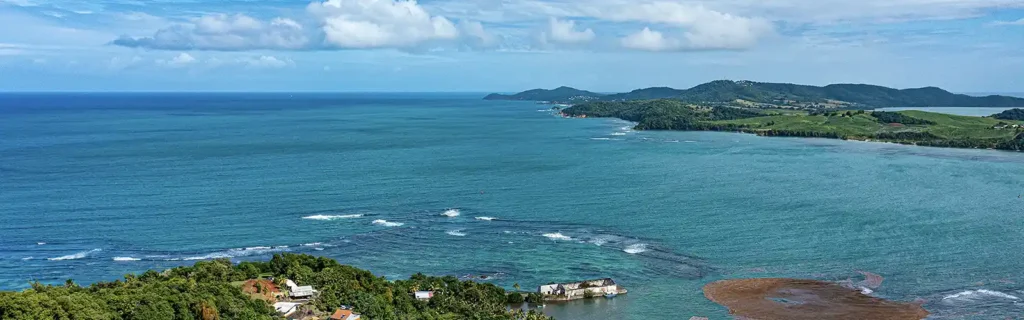
Located in the Caribbean, in the Lesser Antilles archipelago, Dominica is a small island with a population of 70,000. The island has a volcano, a lush rainforest that covers three-quarters of its territory, and many beautiful waterfalls.
Its economy revolves mainly around agriculture, sustainable tourism, and manufacturing. The currency is the East Caribbean Dollar, which is pegged to the US dollar at a rate of 2.7 to 1. And Dominicans speak English. The island’s capital, Roseau, is famous for its colorful houses.
As Dominica has been spared from mass tourism development, it is the best place in the Caribbean for expats seeking a quiet, relaxed pace of life in an unspoiled environment. Despite its minimal tourism infrastructure, residents still have plenty to see and do, including numerous waterfalls, the Boiling Lake, beaches across the island, and the upcoming Dominica Cable Car.
American investors can obtain Dominican citizenship and relocate to the country by contributing to the economy through the citizenship program, which finances infrastructure and community development projects. This option provides a straightforward path to relocation while supporting the country’s economic growth.
- Live a healthy, tranquil lifestyle: Dominica offers an environment that allows residents to live a healthy, tranquil lifestyle, far from the frenetic pace of big cities.
- Low cost of living: The cost to live in Dominica is much lower than in United States, with Numbeo estimating a difference of almost 40 percent.
- Favorable taxes: US citizens living in Dominica can limit income tax through provisions such as the Foreign Earned Income Exclusion (FEIE) and foreign tax credits. Additionally, Dominica does not tax capital gains, wealth, or inheritance.
- Cheap expat health insurance: Expats health insurance schemes are much more affordable in Dominica, with global insurance companies such as Allianz Care offering comprehensive policies from $260 per month.
- Proximity to the US: Dominica is close to the US, which is practical for US expats who want to relocate without being too far from family and friends back home.
- Wonders of nature: Incredible natural wonders and things to do in Dominica are abundant, with 60 percent of the island covered by rainforest and upcoming attractions like the Dominica Cable Car.
- Relocate there easily: Thanks to the Dominica Citizenship by Investment Program, Americans can easily relocate to the country with a Dominica passport, which takes 9 months to get approved.
Regardless of where you choose to live in Dominica, you will see that prices are relatively low compared to those in the US. One of the main aspects of the low cost of of living in Dominica is that rental prices are incredibly cheap: According to Numbeo, a one-bedroom apartment in central Roseau costs just under $300 per month, while outside the center, the average cost is just $220.
The island has cultivated a strong reputation for sustainability and eco-conscious development, which means that using sustainable energy sources has become the norm. Basic utilities cost $140 per month, on average, compared to $215 in the United States. You will easily find locally produced fresh fruits and vegetables at low prices. It’s easy to secure 4G data plans and broadband internet through telecom companies like Flow. A 250 Mbps broadband connection costs just over $40 per month, and a postpaid mobile plan with 50GB of data is priced similarly.
While the overall cost of living is cheaper, US expat residents should remember that imported goods, including electronics, clothing, vehicles, and certain branded food products, are more expensive than in the United States.
In order for American expats to relocate to Dominica, you will need to apply for a visa. There are several Dominica visa options available that allow both temporary and permanent residency.
- Tourism: As an American passport holder, you can enter Dominica for an extended period of up to six months without having to apply for a visa.
- Entrepreneur Visa: The Dominica Entrepreneur Visa authorizes investors to make a $50,000 investment in a government-approved business to relocate to the country. A $100,000 investment in a new start-up company or a public or private-sector venture are also available options.
- Working visa: A Work Visa is available to foreign nationals who receive a job offer to work in Dominica. Eligibility depends on the approval by the Minister for National Security and Home Affairs, who determine whether the foreign national’s employment is justified.
- Citizenship program: The Dominica Citizenship by Investment Program offers citizenship to foreign nationals willing to invest at least $200,000 in the economy.
Get a Dominica passport
The Dominica Citizenship by Investment Program is the most practical path to relocate permanently from the US to Dominica. Investors can contribute $200,000 to the Economic Diversification Fund or invest the same amount real estate to full citizenship rights. By holding a Dominica passport, you have the unrestricted entry in and out of Dominica and the right to reside their indefinitely.
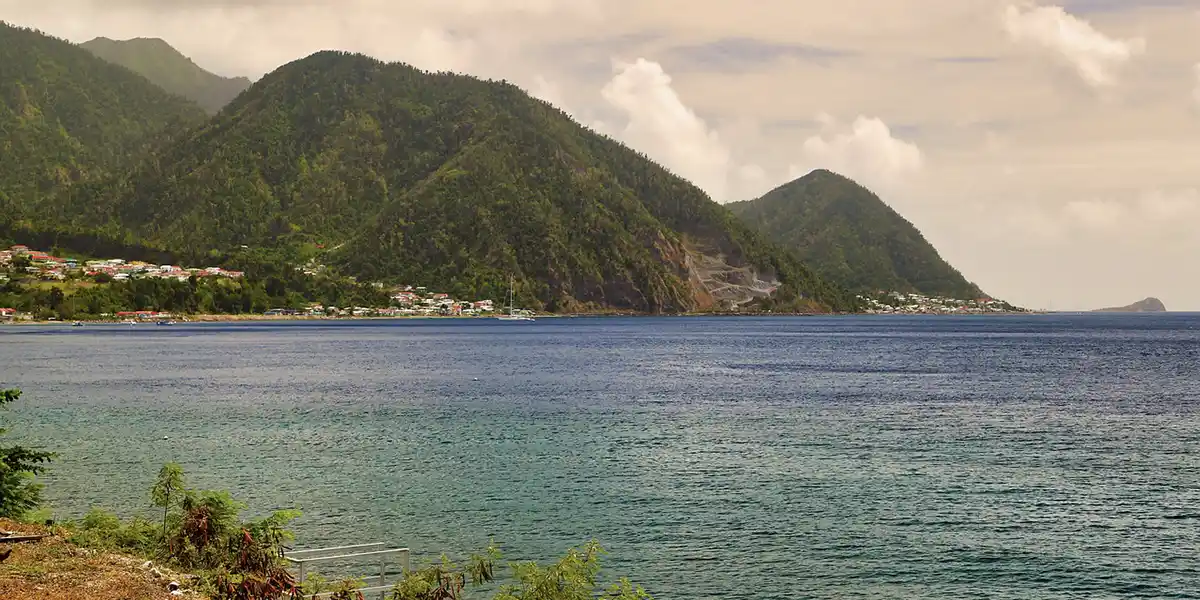

The Dominica real estate market is generally more affordable than most Caribbean islands. The country has largely avoided large-scale tourism and resort developments that are seen elsewhere in the region. Housing options range from contemporary apartments in and around Roseau to secluded villas, eco-lodges, and waterfront condos surrounded by the island’s nature.
For those looking for a primary or second home, Dominica’s citizenship programs provides various approved property to invest in and secure citizenship. Fractional ownership in approved developments, such as The Residences at Secret Bay and Grande Anse Holdings Timbo’s Downtown start from just over $200,000. Investors also have full-ownership options for private villas, making relocation straightforward in develops that provide resort amenities, property management services, and move-in-ready residences.
Buyers are not limited to CBI-approved developments to find value in the property market. Attractive options include a spacious five-bedroom villa in Portsmouth priced at $289,000 through 7th Heaven Properties and a four-bedroom sea-view residence in Salisbury listed for $525,000 through Realty Dominica.
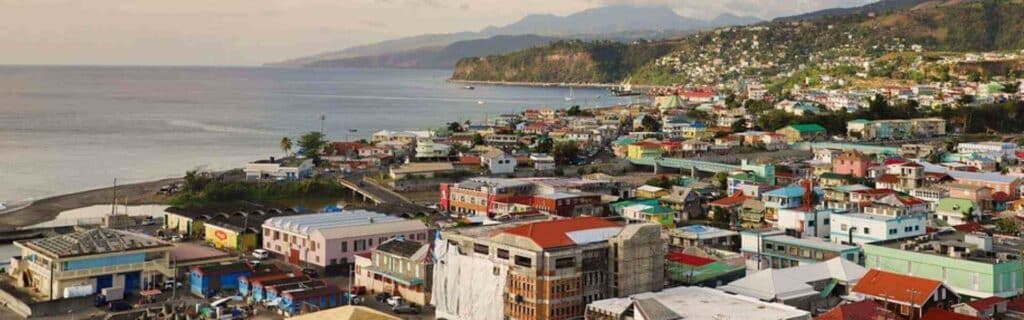
- Roseau: Dominica’s capital and hub, it is the best city in Dominica for Americans who value convenience, with easy access to everyday services, such as shops and banks.
- Portsmouth: Located in northwest Dominica, Portsmouth is laid-back and offers villas and traditional homes on the beach and close to nature.
- Calibishie: Residents in Calibishie enjoy the best ocean views on the islands, and the environment is peaceful and lush. However, it’s one of the island’s remote areas, and residents need to travel to other cities for medical treatment and other services.
- Salisbury: On the west coast, Salisbury is rural and provides good road connections to Roseau. The area is favored among expats who prefer larger properties, with the benefit of being by waterfalls, rivers, and other places to enjoy outdoor activities.
- Mahaut: A short distance south of Roseau, its popularity has risen due to new, affordable residential developments that offer proximity to the capital.
- Soufrière: Those who live in Dominica’s Soufrière neighborhood enjoy some of the island’s most picturesque scenery. Beyond scenery, the town sits near geothermal springs and diving sites, making it well-suited to both permanent residency and short-term vacation rentals.
When considering healthcare in Dominica, you have access to both public and private options. Healthcare is available to the public through several basic health centers, including the Dominica China Friendship Hospital in Roseau. Private clinics are also available for routine consultations and specialist appointments, with a doctor’s visit costing between $20 and $50.
However, expats should note that health services are extremely limited, especially compared to the US. A private healthcare insurance policy that includes evacuation cover is essential for seniors considering retiring in Dominica, but many are not too expensive. Options from Allianz Care that include evacuation coverage start at $260 per month for a middle-aged person.
For families relocating to the island, Dominica’s education system comprises mostly public schooling. Public schools are free for resident children. Many expat families enroll their children in local schools, such as Dominica Grammar School and St. Martin Secondaary School, which provide high-quality education. Dominica does not have international schools. For higher education, All Saints University School of Medicine is located in Roseau in popular among international pre-med students.

Moving to a new country can feel daunting, particularly if you do not already know people on the island. Although Dominica is home to a smaller community of expat Americans than many other islands in the Caribbean, American, Canadian, British, and European expats have established close-knit networks across the island, and the population is growing.
- InterNations: Allows expats to connect with other international residents in Dominica, exchange advice, and participate in the island’s social events and activities.
- Meetup: Helps newcomers discover local groups and communities in Dominica based on shared interests, including outdoor activities and wellness, business networking, and social gatherings.
- Expats in Dominica (Facebook): A Facebook grooup that brings together Dominica’s expat residents and those considering moving there. Members share practical tips on topics such as renting or buying property, healthcare, residency, and daily life, making it useful for newcomers.
