For expats, digital nomads, retirees, and remote workers earning in stronger currencies such as US dollars or euros, Brazil can feel like a cheat code, especially when affordability is balanced with quality of life. The cost of living is around 40% to 60% lower than in the United States, with average monthly expenses ranging from $750 to $1,500 per person. A single person needs around $950 per month, while a family of four spends approximately $2,300 per month, excluding accommodation.
However, costs will be significantly different across the country. Premium cities such as São Paulo and Rio de Janeiro are considerably more expensive than destinations along Brazil’s northeastern coast. This guide breaks down the real cost of living in Brazil, including housing, healthcare, groceries, and transportation, to help you estimate your monthly budget.
Cost of living in Brazil: Key Takeaways


According to Numbeo’s June 2026 data, Brazil is affordable on a global scale, with a Cost of Living Index of 30.1, ranking 125th out of 151 countries. Estimated monthly expenses for a single person average around R$3,253 ($642) excluding rent, while a one-bedroom apartment in a city center costs approximately R$1,974 ($390) per month. Although Brazil remains highly affordable for those earning in stronger foreign currencies, living costs can be noticeably higher in bigger cities such as São Paulo and Rio de Janeiro than in smaller inland cities.
The tables below provide an overview of the cost of living in Brazil for expats, based on Numbeo’s 2026 estimates.
Single person’s monthly budget
Monthly budget for a family of four
- Apartments vs. Houses: Apartments (apartamentos) are the most common choice among expats due to their security, amenities, and convenient urban locations. Houses (casas) are more common in suburban areas and gated communities (condomínios fechados) but often come with higher maintenance responsibilities.
- Condominium Fees (Condomínio): Most apartment rentals include a separate monthly condomínio fee, which covers building maintenance, security, and shared facilities. Depending on the building, this can add 20% to 50% to the base rent.
- Utilities: Basic utilities average around R$414 ($81) per month for a standard apartment. However, electricity costs can increase significantly in warmer coastal regions where air conditioning is used frequently.
Rental prices by city in Brazil
Please note that the Dollar amounts are rough estimates calculated at the current mid-2026 exchange rate of approximately 1 USD = 5.10 BRL. Your actual cost in foreign currency is highly dependent on market exchange rate fluctuations.
Food is one of the most affordable aspects of living in Brazil. Because of the country’s large agricultural sector, local staples, fresh fruit, vegetables, and meat are inexpensive. However, imported products, specialty foods, and dining at high-end restaurants in popular expat areas can increase your monthly expenses.
Your monthly food budget will also depend on your household size and how often you eat at home versus dining out. The estimates below assume a mix of home-cooked meals and occasional dining out.
Grocery prices
The following prices reflect Numbeo’s 2026 national averages for standard supermarket items. Buying local brands (marcas nacionais) at large supermarket chains or fresh produce at weekly street markets (feiras livres) keeps these costs low.
For many expats in Brazil, avoiding the costs, traffic, and administrative burden of car ownership is a practical choice. Bigger cities have reliable public transport networks alongside affordable ride-hailing services.
- Public transport passes: Large cities use integrated transit systems, such as São Paulo’s Bilhete Único and Rio’s Riocard. A single fare typically costs around R$5.00 to R$5.20, while monthly transport passes generally range from R$230 to R$255, depending on the city.
- Uber and 99 App: Ride-hailing is mostly used by expats due to its convenience, safety, and affordability. Uber operates nationwide, while local competitor 99 often offers competitive rates. A typical cross-city journey of 3 to 5 miles usually costs between R$15 and R$30.
- Intercity travel: As Brazil has a limited passenger rail network, long-distance travel is mainly by domestic flights or intercity buses (ônibus interestadual). Premium executive coaches (Leito) offer fully reclining sleeper seats and provide a comfortable, cost-effective alternative to air travel between major cities.
Estimated public transport costs in Brazil
Brazil uses a dual healthcare system made up of a universal free public system and a highly developed private system. Access to high-quality medical care is one of the most important logistical decisions for an expat relocating to the country.
Public vs. private healthcare
Brazil’s public healthcare system, known as SUS (Sistema Único de Saúde), is entirely free for anyone on Brazilian soil, including expats and tourists. Even though SUS handles routine vaccinations, surgeries, and emergency responses exceptionally well, the public sector does come with frm long wait times, resource shortages, and administrative delays. Therefore, over 75% of expats choose to pay for private healthcare insurance (plano de saúde) to gain instant access to the best private clinics.
Health insurance costs by age
Private healthcare insurance premiums in Brazil are strictly tied to age brackets regulated by the ANS (Agência Nacional de Saúde Suplementar). The prices below are based on 29026 estimates for mid-range plans from providers such as Unimed, Amil, and SulAmérica, which offer access to private hospitals and private rooms.
Medical service costs
If you choose to pay out-of-pocket (particular) without an insurance plan, private facilities require upfront payment. The costs below represent the average private fees across major metropolitan areas:
All individuals considering moving to Brazil should be aware of Brazil’s income taxes. Brazil uses a straightforward tax residency system based on the amount of time you spend in the country. If you move to Brazil on a permanent residence visa, or spend more than 183 days in the country within a 12-month period on a temporary or digital nomad visa, you will be considered a Brazilian tax resident.
As a tax resident, your worldwide income becomes subject to Brazilian income tax, with rates of up to 27.5%. Foreign income earned from remote work should also be declared and reported through the government’s Carnê-Leão system. Additionally, recent tax reforms apply a flat 15% tax rate to certain offshore assets and capital gains.

1. Brazil Investor Visa (Golden Visa / VIPER)
The Brazil Investor Visa was introduced under Normative Resolution RN 36/2018 and provides investors with a path to permanent residence after 4 years by either buying property in Brazil or investing in a business. Applicants only need to spend 14 days in Brazil every two years to maintain their status.
- Real estate: The minimum investment is R$1,000,000 (~$196,000) in major cities such as São Paulo, Rio de Janeiro, and Florianópolis. In selected North and Northeast regions, including João Pessoa and Fortaleza, the requirement is reduced to R$700,000 (~$137,000).
- Business Route: Investors can start a new company or invest in an existing Brazilian business. The standard investment requirement is R$500,000 (~$98,000), supported by a three-year business plan focused on job creation. For approved technology, AI, biotechnology, and green energy startups, the minimum investment may be reduced to R$150,000 (~$29,500).
2. Brazil Digital Nomad Visa (VITEM XIV)
The Brazil Digital Nomad Visa is designed for remote workers employed by companies or clients outside Brazil. It is issued for one year and can be renewed for an additional year. Applicants must show a monthly income of at least $1,500, plus around $60 per dependent, or demonstrate savings of at least $18,000 in an accessible bank account. Visa holders cannot work for Brazilian companies or earn income from local employers.
3. Brazil’s Retirement Visa
Brazil’s Retirement Visa (VITEM XIV) is available to retirees who can prove a guaranteed pension or retirement income of at least $2,000 per month. Applicants can include up to two dependents, with an additional income requirement for extra family members
São Paulo: Jobs, infrastructure, and corporate business
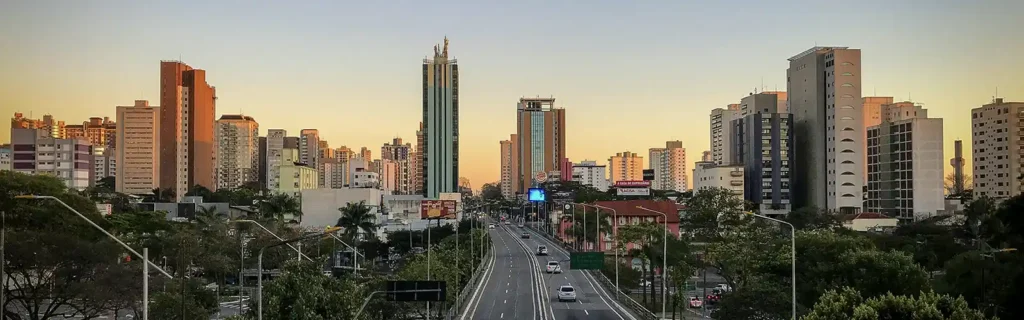
As the financial powerhouse of South America, São Paulo is the ultimate destination for executive transfers, corporate networkers, and industry builders. It has the strongest and most efficient infrastructure in the country, with elite private hospitals, the best international schools, and a legendary culinary scene. It is Brazil’s most expensive city, and is in turn prone to traffic congestion, an immediate access to nature or beaches. The cost of living here is about R$ 5,700 – R$ 7,100/month ($1,100 – $1,350 USD). And renting in the city will increase the costs.
Florianópolis: Digital nomads and tech workers
Florianópolis, often called “Floripa” or the “Magic Island,” ranked among the world’s fastest-growing digital nomad destinations in 2026. It is also frequently referred to as the “Silicon Valley of Latin America” because of its growing startup ecosystem, reliable fiber-optic internet, and a growing community of remote workers. However, the city experiences significant population growth and higher prices during the summer tourist season (December to February). Its spread-out layout can also make getting around more difficult without relying on ride-hailing services. Here, the living expenses can add up to about R$ 5,200 – R$ 6,500/month ($1,000 – $1,250 USD).
Curitiba: Affordability and safety
If you are looking for an organized and well-planned city without the high costs of São Paulo, Curitiba is an excellent option. It is known and loved for its efficient public transport system, lower crime rates, and abundant green spaces, with a high quality of life at around 35% less than the cost of living in São Paulo. However, the climate is cooler and rainier than many people expect from Brazil, and the social atmosphere tends to be more reserved. A single person can expect to spend about R$ 4,500 – R$ 5,800/month ($850 – $1,100 USD).
Fortaleza: Coastal lifestyle and budget Living
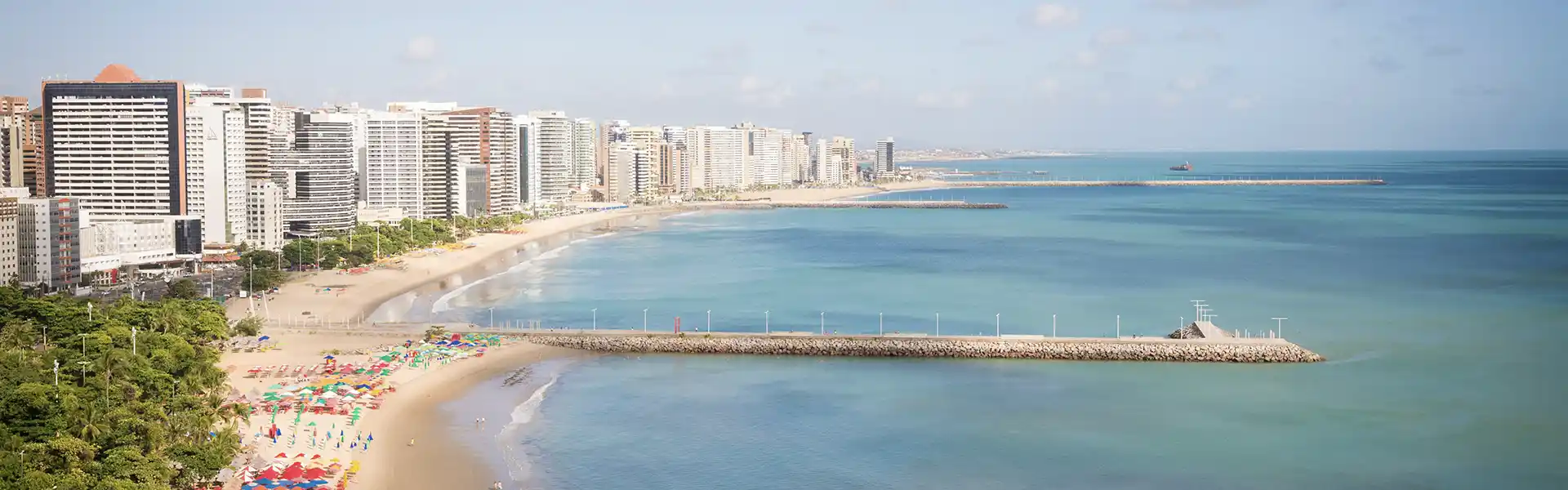
Fortaleza is positioned on the sunny northeastern coast and offers direct access to a warm beach lifestyle at a steep discount compared to Rio de Janeiro. Renting inside the city center runs nearly 50% cheaper than São Paulo. Certain neighborhoods suffer from elevated security challenges, meaning expats must be highly selective about where they choose to live. With access to affordable oceanfront properties, the monthly expenses can add up to ~R$ 4,100 – R$ 5,300 ($800 – $1,000 USD)
João Pessoa: Cheapest beach city
For individuals tracking the cheapest city in Brazil, João Pessoa is the ultimate target. It stands out as the lowest-cost coastal capital in the country. According to Numbeo data, rent here is roughly 51% cheaper than São Paulo, and overall grocery costs also sit well below the national average. It has an incredibly calm, clean, and slow-paced beach environment that is perfect for retirees and slow-traveling expats looking for a coastal lifestyle on a budget. The expat community is relatively small, English is rarely spoken by local businesses, and the nightlife is not the most lively compared to neighboring capitals. But the living expenses make up for it as they can be as low as ~R$ 3,800 – R$ 4,900/month ($700 – $950 USD).
How Can Global Citizen Solutions Help You?
Global Citizen Solutions is an advisory migration consultancy firm with years of experience delivering bespoke residence and citizenship by investment solutions for international families. With offices worldwide and an experienced, hands-on team, we have helped hundreds of clients worldwide acquire citizenship, residence visas, or homes while diversifying their portfolios with robust investments.
We guide you from start to finish, taking you beyond your citizenship or residency by investment application.
