This June, 41 singers from 25 countries travelled to Portugal to compete in the latest edition of Cascais Opera. They were selected from 499 applicants representing 59 countries and performed before a jury drawn from some of the world’s leading opera houses and festivals.
Cascais hosted the competition before the final moved to the Gulbenkian Foundation in Lisbon on 7 June. Emerging singers from across the globe performed before casting directors, artistic leaders, and cultural institutions capable of changing the course of a career with a single audition.
While the festivities bring opera to life, what many people won’t see is the network of cultural support that makes a competition like this possible.
For Alexandra Maurício, co-founder and General Director of Cascais Opera, the competition represents something larger than music.
“We wanted to create a major opera competition in Portugal and, from Portugal, for the entire world.”
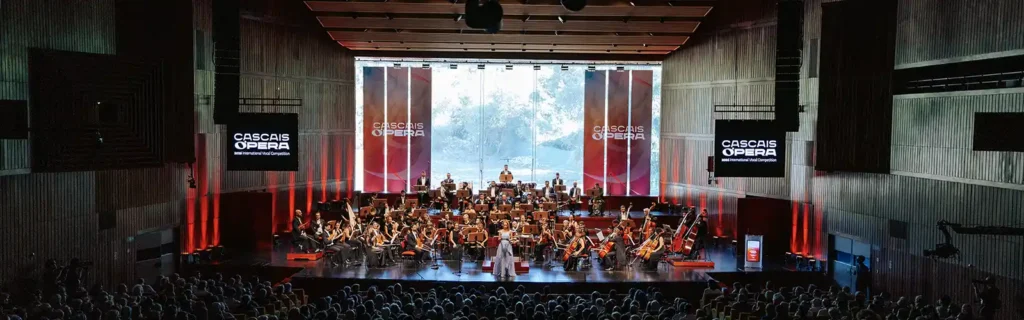
The ambition was born during a conversation in Cascais among Maurício, the internationally renowned baritone Sergei Leiferkus, and pianist Adriano Jordão. Looking across Portugal’s cultural landscape, they saw an opportunity.
“There were festivals of theatre, of music, of dance — but something truly dedicated to opera, not an opera house, but a competition, was missing from the market.”
The choice of Cascais was equally intentional.
For Maurício, the competition was never meant to exist in isolation from its surroundings. Part of its appeal lies in the experience of Portugal itself.
Contestants arrive not only to perform, but to spend time in a place where the ocean, architecture, history, and cultural life are all within reach. Cascais offers a setting where artists can move easily between venues, rehearsals, conversations, and performances while experiencing a different side of Portugal.
That sense of place has become an important part of the competition’s identity.
Rather than separating the event from its environment, Cascais Opera embraces it. Jury members, contestants, investors, and visitors are encouraged to experience both Cascais and Lisbon, creating connections that extend beyond the competition itself.
For Maurício, introducing international artists to Portugal is part of the mission.
“We want people to discover Portugal through culture.”
Three editions later, the results speak for themselves.
Cascais Opera joined OLA – Opera Latinoamérica following its inaugural edition in 2024 and, in 2025, was accepted into the WFIMC – World Federation of International Music Competitions after just two editions. The recognition placed Cascais Opera alongside competitions with 60 and 70 years of history, despite being only in its third edition.
For Maurício, however, success is measured by more than numbers.
At the heart of Cascais Opera is a belief that competitions should help artists develop, regardless of whether they leave with a prize.
“We provide immediate feedback from the jury members, explaining why they did not progress, what they should work on, and — crucially — encouraging them not to give up.”
Singers who are eliminated from the competition do not simply go home. They remain part of the experience through masterclasses, career workshops, and coaching sessions led by jury members and industry professionals.
“We also offer free masterclasses. Masterclasses in voice, in stage movement, in career perspective: how to present yourself, how to dress, how to write your CV.”
That educational mission has become one of the competition’s defining characteristics.
The organisation is now preparing for its next chapter. In 2027, Cascais Opera plans to launch the Cascais Opera Academy, expanding its commitment to professional development and advanced training for emerging singers. The Academy’s masterclasses will be led by acclaimed mezzo-soprano Jennifer Larmore, who has been appointed Artistic Director of the programme.
The goal is not simply to host an annual competition. It is to help build an ecosystem capable of supporting artists throughout their careers.
The competition’s growing reputation rests heavily on the calibre of the people listening. Jury members are drawn from some of the world’s most respected opera houses and festivals, including the Wiener Staatsoper, Glyndebourne Festival, and leading institutions in Berlin, Munich, Valencia, Portugal, and Turkey.
For many contestants, the opportunity to perform before these industry figures is one of the competition’s greatest attractions. It is not simply about winning a prize. It is to be heard by people capable of opening professional doors.
“The contestants are here to be heard by these important personalities,” Maurício explains. “Even if they don’t win a prize, a jury member may remember a voice.”
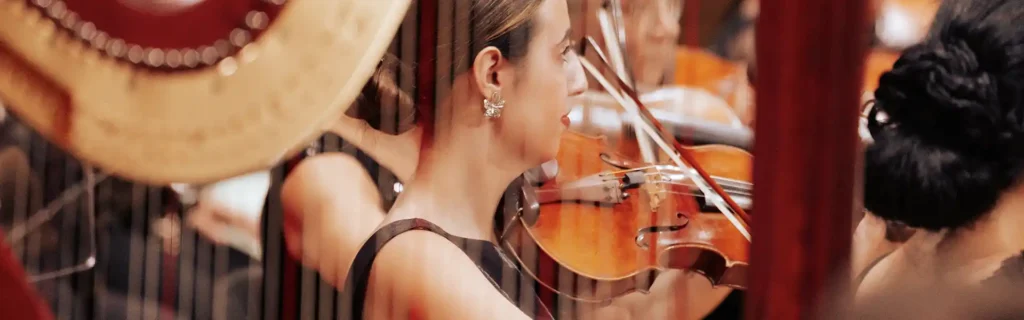
The impact of that opportunity can be seen in the careers the competition has already helped shape.
Maurício recalls a young Portuguese singer named Teresa who reached the final in the competition’s first edition but did not win one of the competition’s principal awards.
A few weeks later, Robert Körner, casting director of the Wiener Staatsoper, reached out.
“He said: Alexandra, I loved her voice. I want to invite her to audition for our Young Artists Programme.”
Teresa passed the audition.
Today, she is performing and learning on one of the world’s most prestigious stages.
“Most of the time she tells me: Cascais Opera was the turning point in my life.”
Stories like these help explain why the competition continues to attract attention from around the world.
Yet behind Cascais Opera lies another story — one about how cultural institutions are built.
Historically, artistic movements have often depended on individuals willing to support them long before success was guaranteed. The great cultural centres of Europe were shaped by patrons who saw value in investing in artists and cultural institutions. While governments continue to play an important role in supporting culture today, private investment remains equally important.
Portugal’s Golden Visa cultural contribution pathway offers a modern version of that tradition.
Since its launch in 2015, the programme has directed millions of euros toward artistic and cultural initiatives across Portugal, supporting film production, performing arts, museum preservation, and archaeological projects. Interest in the pathway has grown significantly in recent years as investors seek opportunities that combine residency with support for cultural and social impact.
Through approved cultural projects and institutions, private capital can support artistic development and heritage preservation, helping initiatives that might otherwise struggle to access long-term funding.
For Maurício, support of this kind is about much more than funding a competition. It creates opportunities for artists, helps them develop their potential, and ensures cultural institutions can continue investing in future generations.
For those who support projects like Cascais Opera through Portugal’s cultural contribution pathway, the relationship often extends beyond financial support.
Ms Sunny Dupree, a supporter of Cascais Opera who attended the 2026 competition, described the event as “an exceptional experience”. Reflecting on the final performances in Lisbon, she praised the calibre of the young artists, noting that “each singer could have had a solo evening concert of their own, such was the quality of their voices.”
The same philosophy that shapes the competition also shapes the experience offered to supporters. Rather than viewing culture as a single event or performance, Cascais Opera seeks to connect investors with a broader cultural ecosystem that spans Cascais, Lisbon, and the institutions that define Portugal’s artistic life.
Maurício describes it as an immersive experience.
“What we offer investors is a fully immersive cultural experience. And when I say culture, I mean culture in its broadest sense: literature, theatre, the performing arts, architecture, landscape, gastronomy.”
Supporters attend concerts and rehearsals. They meet artists, jury members, and cultural leaders. They experience Cascais and Lisbon through the lens of the institutions they are helping sustain.
“We want to give investors the full experience — the views, the feeling of Lisbon, and the full atmosphere of Cascais.”
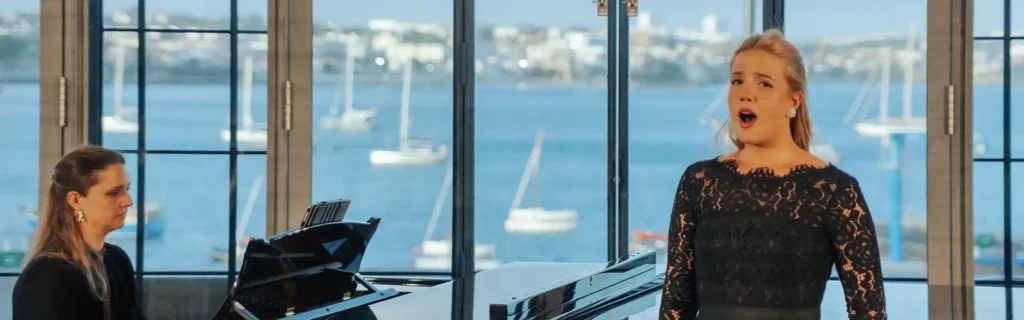
Perhaps that is why the story of Cascais Opera resonates beyond the opera world itself.
It speaks to a broader question about the role private capital can play in shaping cultural life.
As Portugal continues to attract international attention, institutions like Cascais Opera demonstrate what can happen when artistic ambition is matched by long-term support.
A competition that began with a conversation in Cascais is now attracting applicants from nearly 60 countries.
Young artists are finding opportunities that can transform their careers, while new educational initiatives continue to take shape. At the same time, Portugal is strengthening its place on the international cultural map.
In many ways, that was the vision from the beginning.
As Maurício puts it: