
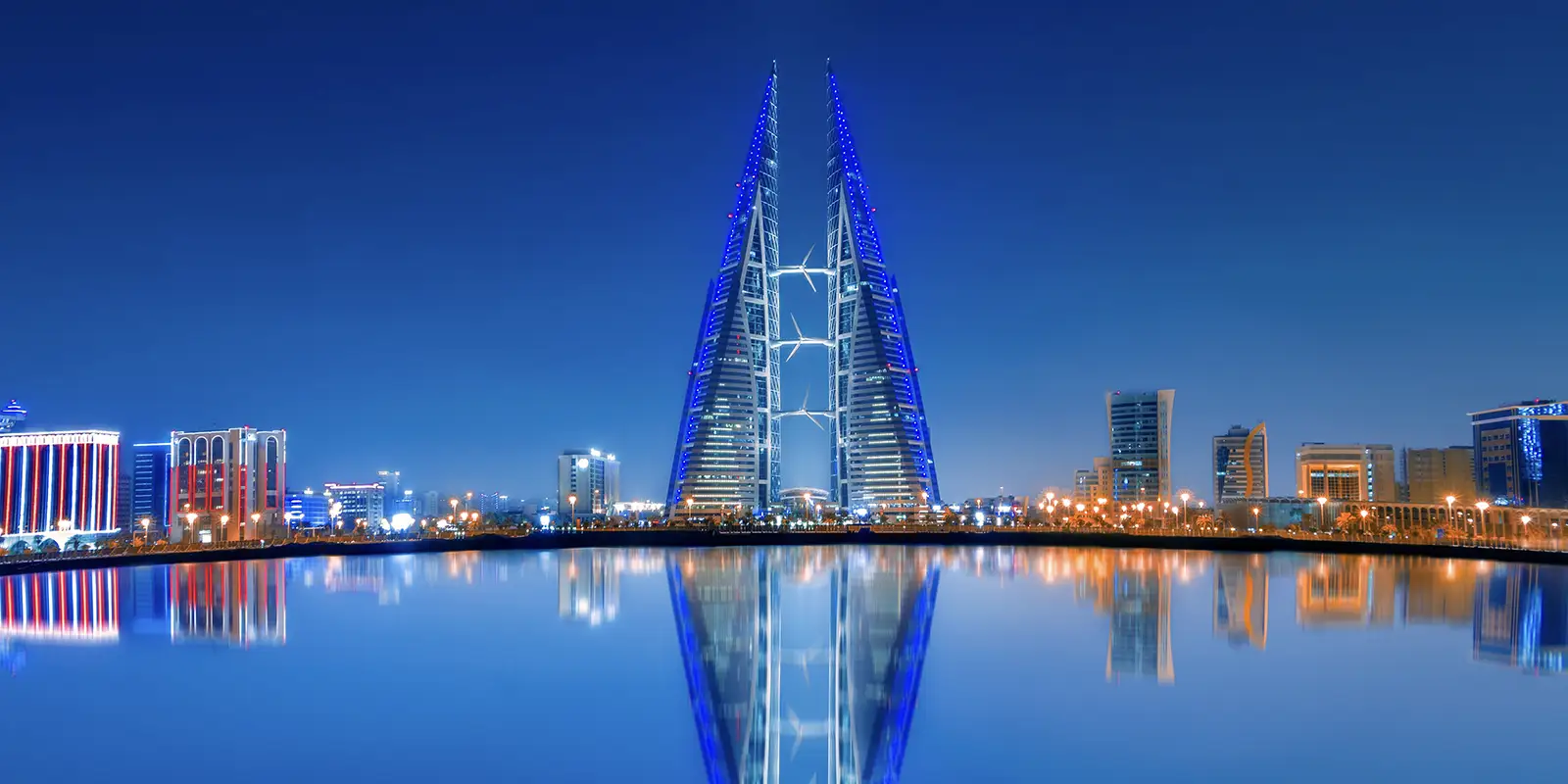
Bahrain has a population of about 1.5 million and a nominal GDP of roughly US$45 billion, with a diversified, finance-oriented economy. It is a GCC member and its dinar is pegged to the US dollar. Its Golden Residency is featured in the index.
Bahrain has a population of about 1.5 million and a nominal GDP of roughly US$45 billion, with a diversified, finance-oriented economy. It is a GCC member and its dinar is pegged to the US dollar. Its Golden Residency is featured in the index.
The Global Residency Programs Index 2026 compares 48 residency pathways across five dimensions: Procedure, Mobility, Tax Optimization, Quality of Life, and Investment. The overall score provides a high-level comparison, while the individual rankings help readers identify the strengths and trade-offs most relevant to their priorities.
Index | Ranking | Score |
|---|---|---|
Overall Ranking
| 37th | 81.33 |
Procedure
| 45th | 74.27 |
Mobility
| 42nd | 59.4 |
Tax Optimization
| 1st | 100 |
Quality of Life
| 21st | 83.25 |
Investment
| 3rd | 99.58 |
Bahrain’s Golden Residency offers long-term residence through property, income, or retiree routes, with comparatively accessible thresholds for the Gulf.
Programme: Golden Residency Legal basis: Golden Residency Visa (2022), administered by the NPRA under Legislative Decree No. 24 of 2019 Indicative minimum: BHD 200,000 (approximately USD 530,000) in property, or an income or retiree route Estimated processing: 6 to 12 weeks
Category | Details |
|---|---|
Legal Provision
| Golden Residency Visa (2022), administered by Nationality, Passports and Residence Affairs (NPRA) under Legislative Decree No. 24 of 2019 on the Residence of Foreigners. |
Region
| Middle East and North Africa |
Minimum Investment Threshold
| BHD 200,000 (~USD $530,000) property, or income/retiree route |
Year of Inception
| 2022 |
Visa-free Countries
| 115 = 45 (visa-free destinations) + 70 (visa on arrival/ETA) |
Investment Options
| Bahrain’s Golden Residency Visa provides a sponsor-free, indefinitely renewable 10-year residency permit that grants foreign nationals full family-sponsorship rights, open-market work privileges and unconstrained travel without any minimum physical-stay mandates. To qualify, all applicants must clear official background checks, maintain private health insurance, and meet the criteria of one of the programme’s primary pathways. Under the Real Estate Route, individuals must acquire one or more properties in designated freehold zones with a total personal equity value of at least BHD 130,000 (~$345,000 USD). For those applying on passive income, the Retiree Route requires a guaranteed monthly pension of BHD 4,000 (~$10,600 USD) for overseas applicants, or a reduced BHD 2,000 (~$5,300 USD) for long-term residents with at least 15 years of prior employment in the Kingdom. Alternatively, the Highly Skilled Track rewards exceptional talent, granting residency to foreign specialists who have worked continuously in Bahrain for a minimum of five years while maintaining a verified basic monthly salary of at least BHD 2,000. |
Physical Presence Requirements
| Reside 90 days/year |
Family Member Inclusion
| Spouse, children, parents |
Dual Citizenship Allowed
| No |
Path to Citizenship
| n/a (naturalisation highly restricted) |
Average Processing Time
| 6–12 weeks |
The 2026 Global Residency Programs Index makes one thing clear: there is no single best programme, only the best fit for a given set of priorities. A decade of reform has left the sector more transparent, more compliance-driven and more diverse in the routes it offers (from regulated funds and entrepreneurial ventures to lifestyle and long-stay options) so that residency has matured into a credible, durable planning tool rather than a shortcut. Whether the goal is mobility, tax efficiency, quality of life or an eventual second passport, the value of this 2026 GRP Index lies in matching the right route to the right objective, grounded in evidence rather than marketing.